 Leo
Leo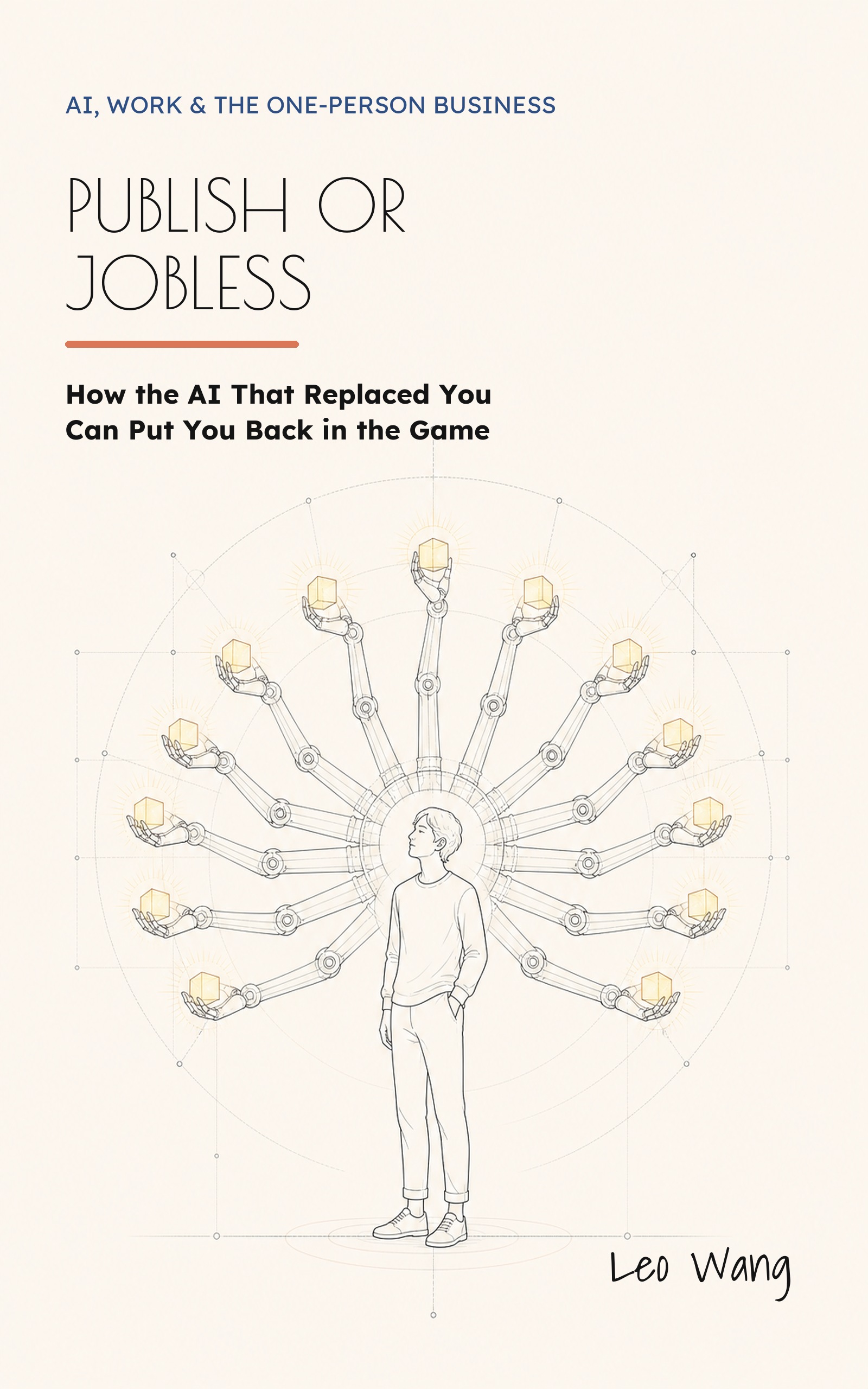
New · 2026新书 · 2026
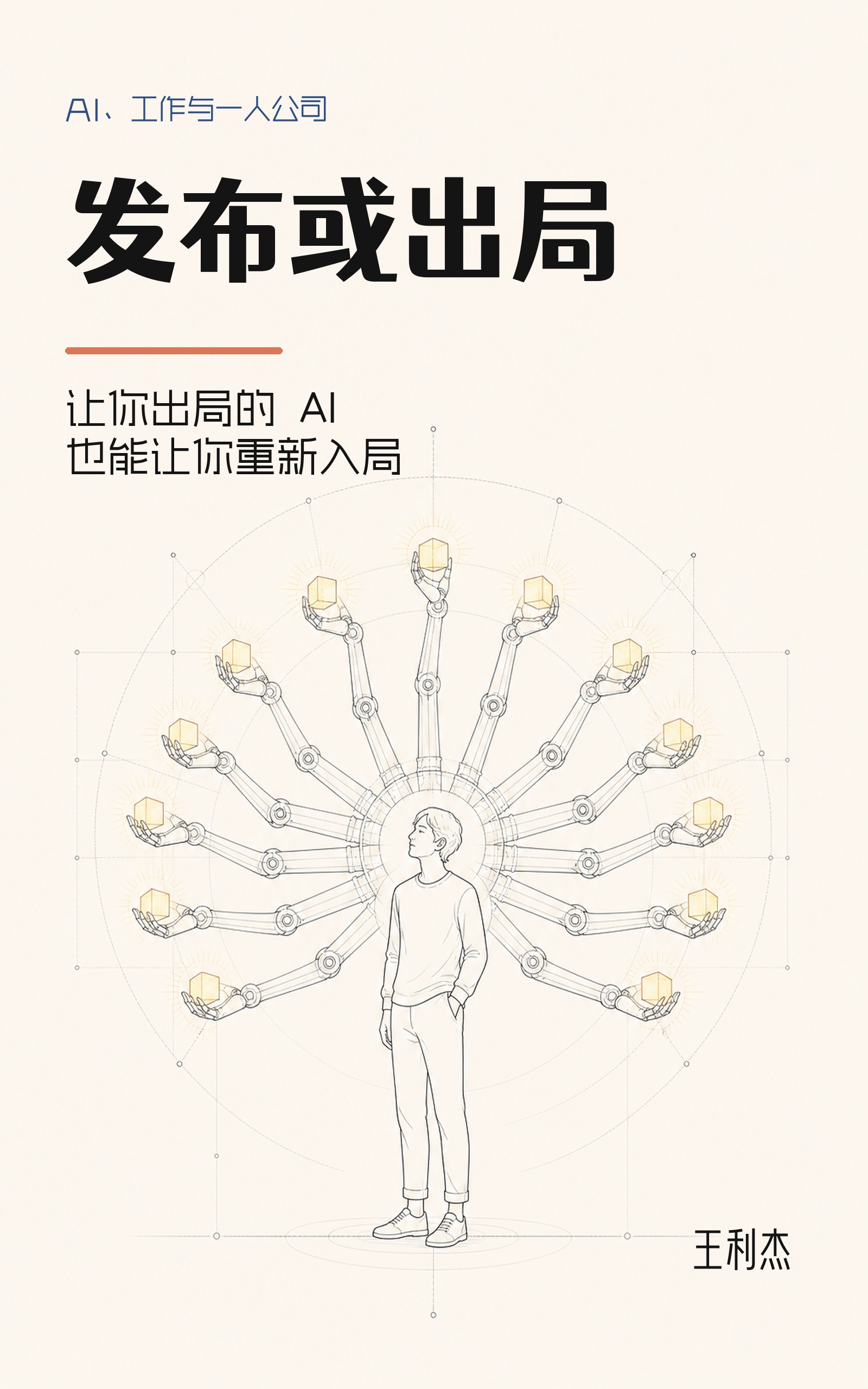
Publish or Jobless发布或出局
How the AI That Replaced You Can Put You Back in the Game让你出局的 AI,也能让你重新入局
AI may take your job. Good. This is a field manual for turning the same machine that replaced you into your labor force — and pointing it at the small, owned assets a company was always too expensive, and too uninterested, to build.AI 也许会抢走你的工作。太好了。这是一本实战手册:把那台取代你的机器,变成你的劳动力军团,去建造那些公司一向嫌太贵、也太小而不愿碰的——属于你自己的小资产。
Overview概述
About the Book关于本书
A friend of mine — call him David — spent eleven years becoming very good at something that stopped mattering in about eleven months. He wasn't replaced by a robot that does his job badly. He was replaced by a cheap, tireless, slightly-worse copy of his own judgment, available at three in the morning and never asking for a raise. Most jobs do not pay for the last ten percent of quality that separates you from that copy.我有位朋友,姑且叫他大卫。他花了十一年磨练一项技能,结果这项技能在短短十一个月内变得一文不值。取代他的,不是一个把活干砸的机器人,而是他自己判断力的廉价复刻版——不知疲倦,凌晨三点随叫随到,还从不提加薪。而绝大多数工作,根本不会为你比复制品高出的那 10% 品质买单。
The anxious worker keeps asking the same two-hundred-year-old question: how do I keep my job? It is the wrong question. The better one — the one this book is built around — is: now that the cost of labor has collapsed, what can I build that I could never afford to build before? The same machine that cheapened your labor is available, for the price of a subscription, to build the asset you own.焦虑的打工人始终在问那个有两百年历史的老问题:我怎么保住饭碗?这问题问错了。更好的问题——也是本书通篇围绕的问题——是:既然劳动力成本已经崩塌,有什么是我以前造不起、现在却能造出来的东西?那台让你时间贬值的机器,如今只需一份订阅费,就能用来建造属于你自己的资产。
This is not the usual "make money with AI" garbage, and it is not passive income. Publishing an asset strangers will pay for still demands the scarcest things in the world — real judgment, taste, the patience to ship something complete. AI supplies the labor; it cannot supply the judgment. The author is running the experiment in public: this very book came off an AI publishing pipeline he builds and openly debugs.这不是「用 AI 赚钱」那类垃圾内容,也不是被动收入。想让陌生人真金白银为你的资产买单,依然需要世上最稀缺的东西——真实的判断、审美的品味、把东西做完整的耐心。AI 提供劳动力,却提供不了判断力。作者正在公开做这场实验:你手里这本书,本身就出自他亲手搭建、公开调试的 AI 出版流水线。

Argument核心论点
What This Book Argues这本书主张什么
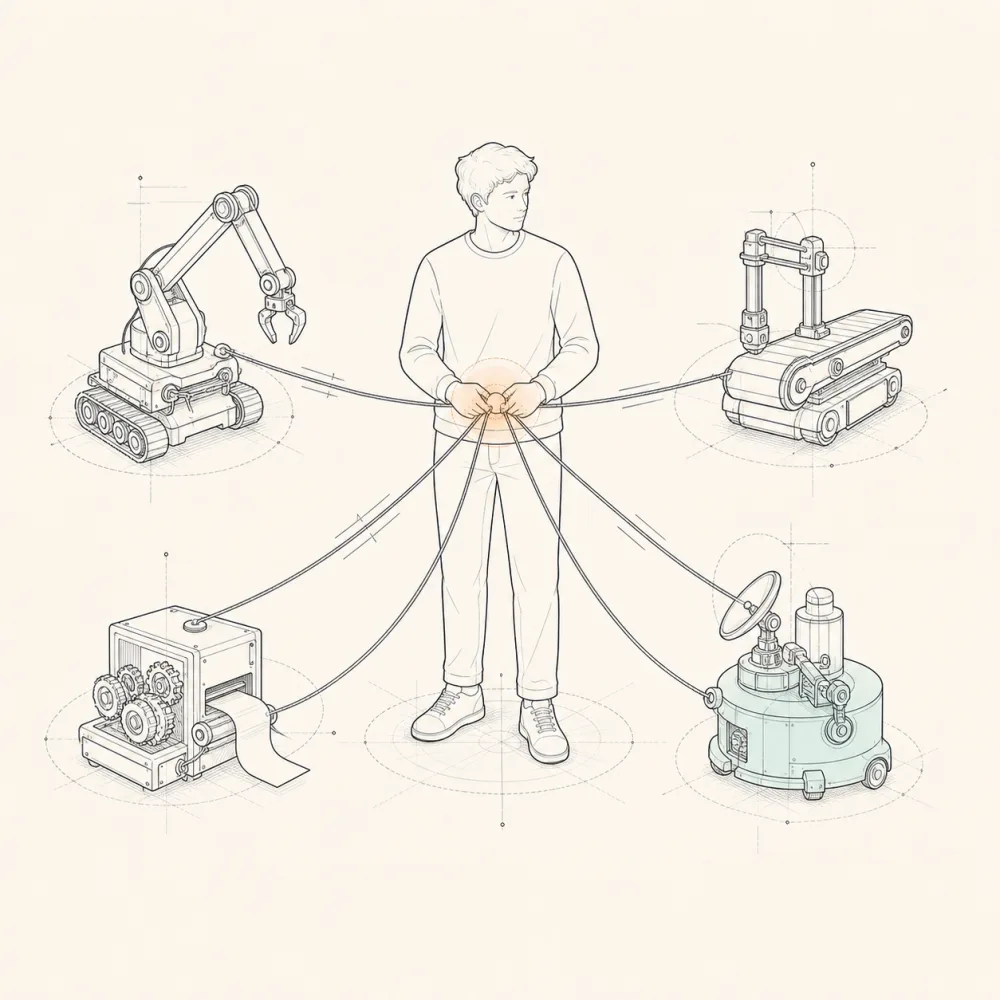
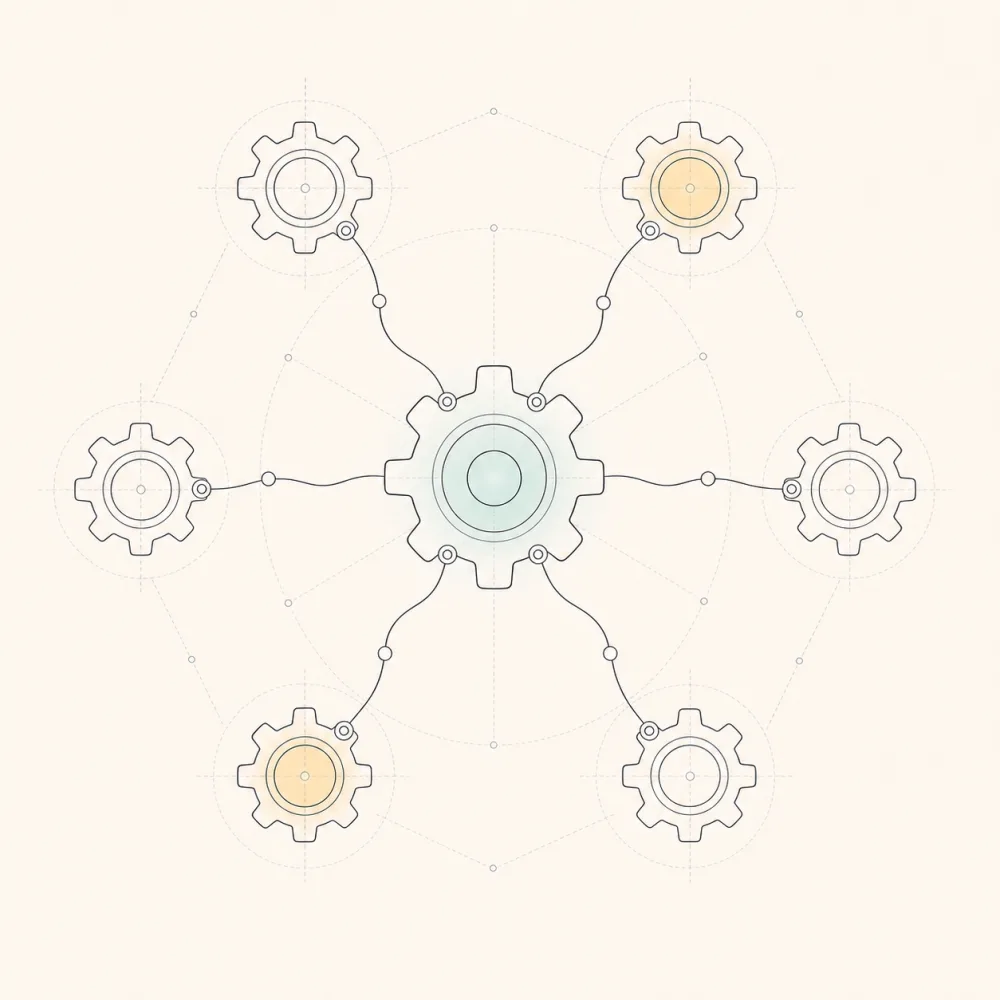
AI didn't just take your job — it handed out a workforce. The only tragedy is that the company got it first.AI 不只抢走了工作——它派发了一支劳动力军团。唯一的悲剧是,公司先拿到了它。
The real danger isn't unemployment; it's economic invisibility — owning no asset a stranger can find, judge, and pay for.真正的危险不是失业,而是「经济隐形」:你没有任何资产,能让一个陌生人发现、评估并为之付费。
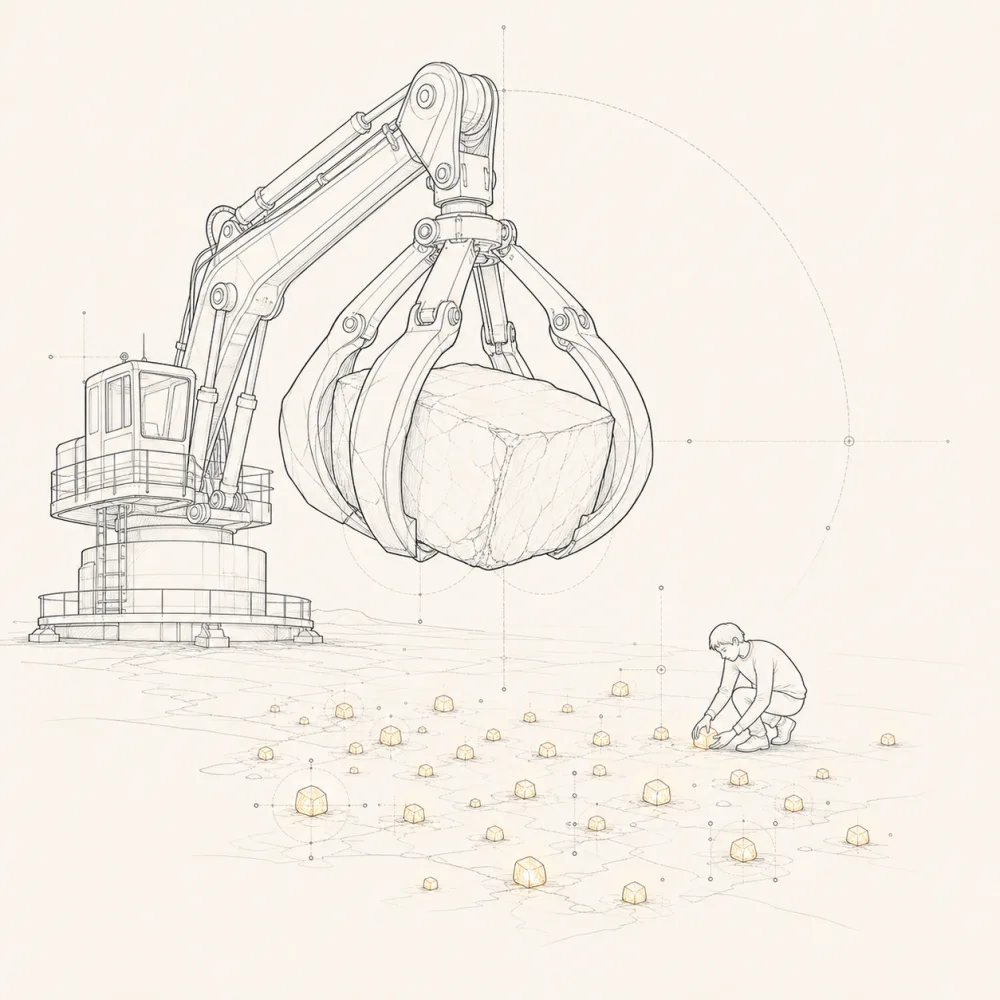
AI collapses the break-even point of entrepreneurship — markets once too small for a company now comfortably feed one person.AI 打掉了创业的盈亏平衡点——过去养不起一家公司的小市场,如今足够一个人活得滋润。
To publish is to ship a public asset a stranger can find, trust, use, buy, or share — not to post content or build a brand.「发布」是交付一份陌生人能发现、信任、使用、购买、分享的公开资产——不是发帖,也不是做个人品牌。
AI supplies the labor; it cannot supply the judgment. Without judgment, it just helps you make worthless things faster.AI 提供劳动力,却提供不了判断力。没有判断力,它只会帮你更快地制造废品。
Don't defend a job against a falling cost curve. Own a portfolio of tiny machines the whole market can see.别在下坠的成本曲线前死守一份工作。去拥有一组整个市场都看得见的微型机器。
Structure结构
Inside the Book书中内容
From "you've been displaced" to "you own a portfolio" — one continuous argument.从「你被替代了」到「你拥有一组资产」——一条连贯的论证线。
Readers读者
Who This Book Is For这本书写给谁
Preface序言
Read the Introduction先读序言
The book's full opening — in the author's own words, before you decide.全书开篇原文——作者的亲笔,供你下决定之前先读。
Why the collapse of labor cost is the best thing that ever happened to people with judgment.
The machine that can replace your work can also be hired to do your work. The only question is who owns the output.
A friend of mine — call him David — spent eleven years becoming very good at something that stopped mattering in about eleven months.
He was a senior copy and content strategist at a mid-sized marketing agency. Not a junior churning out blog posts; a strategist. He decided the angle, set the voice, briefed the writers, argued with clients, rescued the campaigns that were going sideways. His judgment was the product. Then the agency rolled out an internal AI writing system, and within a year the team that used to need David plus four writers needed David plus a prompt. By the end of that year the agency did the obvious arithmetic: if one person plus a model produces what five people used to produce, you do not need five strategists. You need one — and the one you keep is David, the best of the five — on a thinner contract, until you decide whether you even need him.
David was not replaced by a robot that does his job badly. He was replaced by a version of his own judgment, running at one-fortieth of the cost, available at three in the morning, never asking for a raise. That is the part nobody warns you about. The threat is not that AI is worse than you. The threat is that AI is a cheap, tireless, slightly-worse copy of you, and most jobs do not pay for the last ten percent of quality that separates you from the copy.
When David told me this story he expected sympathy. What I told him instead was: this is the best thing that has happened to your career, and you cannot see it yet because you are still standing on the wrong side of the transaction.
The wrong question and the better one
For two hundred years, the anxious worker has asked the same question every time a new machine appeared: How do I keep my job? It is a reasonable question and it is the wrong one, because it accepts a frame that no longer serves you. It assumes you are a seller of labor, that your income comes from renting your hours to one buyer, and that the goal is to keep that one buyer paying.
The better question — the one this entire book is built around — is this: Now that the cost of labor has collapsed, what can I build that I could never afford to build before?
This is not motivational reframing. It is economics. The most cited framework for understanding automation, developed by the economists Daron Acemoglu and Pascual Restrepo, describes two opposing forces every time a task gets automated. There is a displacement effect — machines take over tasks humans used to do, which pushes down the demand for that labor and its wage. And there is a productivity effect — the cost savings from automation increase demand for labor in all the tasks that were not automated. The displacement effect is the one David felt. The productivity effect is the one almost nobody on the worker's side of the table ever captures, because to capture it you have to own something other than your own hours.
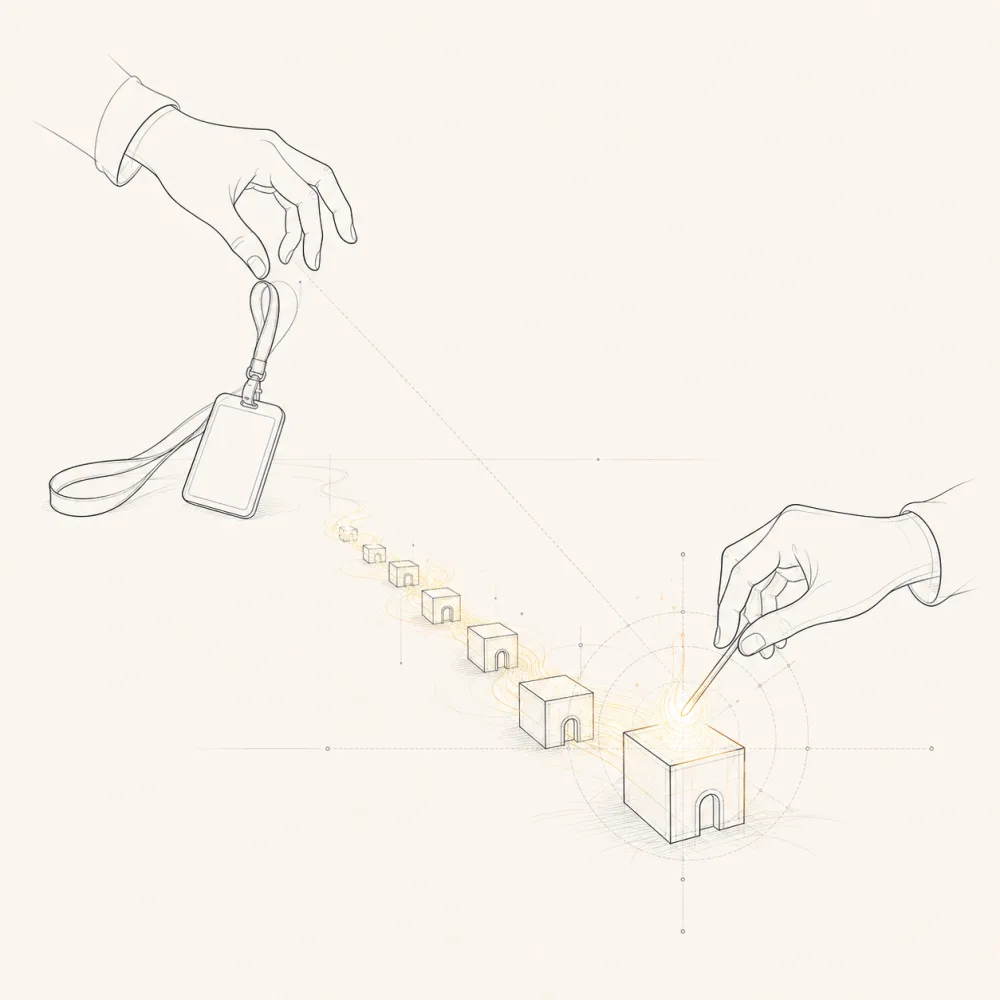
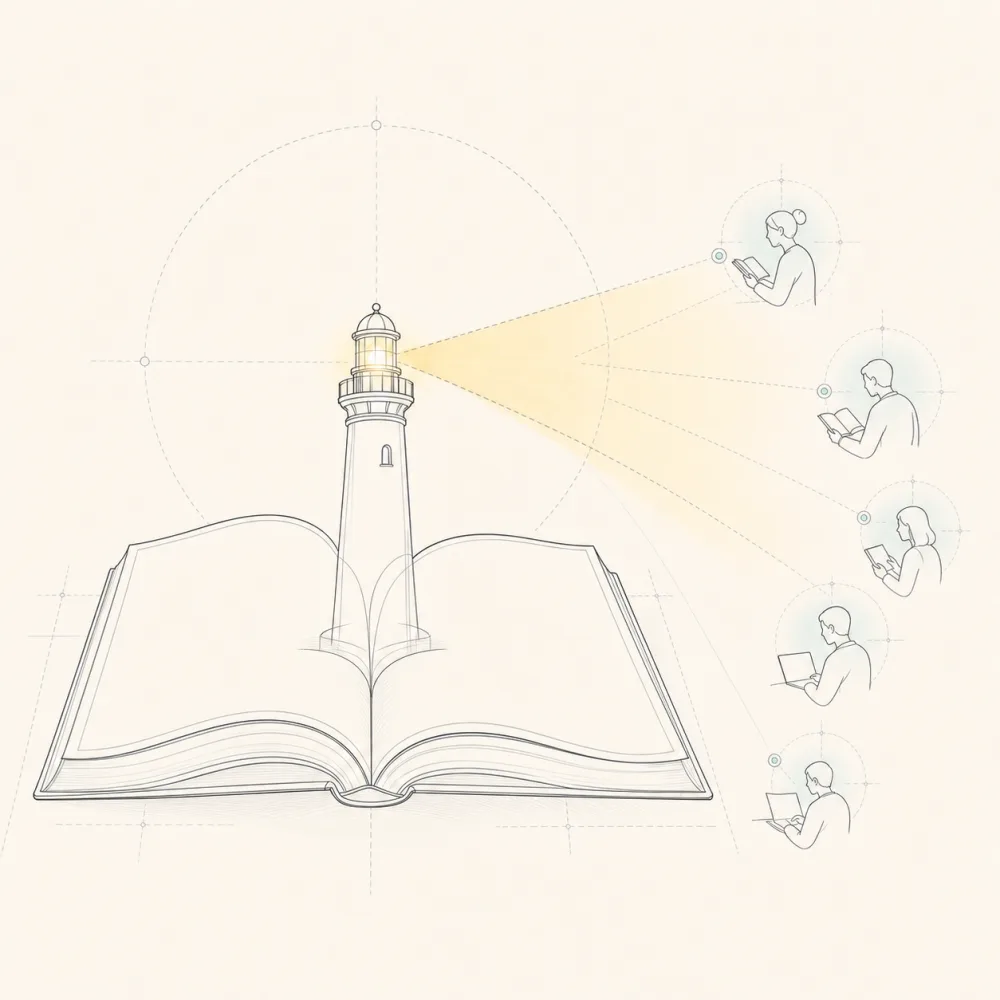
Here is the move. The same collapse in labor cost that made David's employer need fewer strategists also means that David, as one person, can now command the labor of a hundred junior writers, researchers, designers, and coders — for the price of a software subscription. The cost structure that destroyed his job is the exact cost structure that could let him serve markets too small for his old agency to ever bother with. The machine did not just take a job. It handed out a workforce. The tragedy is that it handed the workforce to the company first, and the worker is supposed to quietly accept being on the losing side of a productivity boom he could have owned.
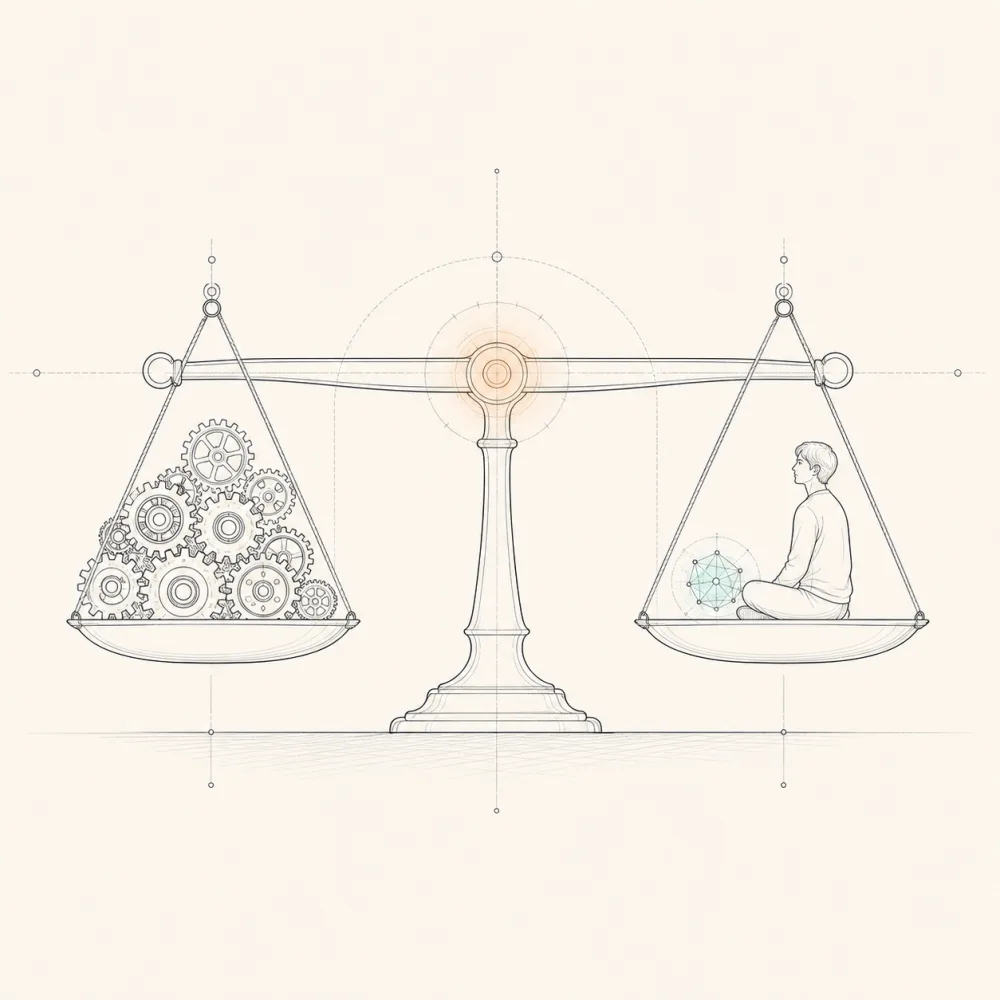
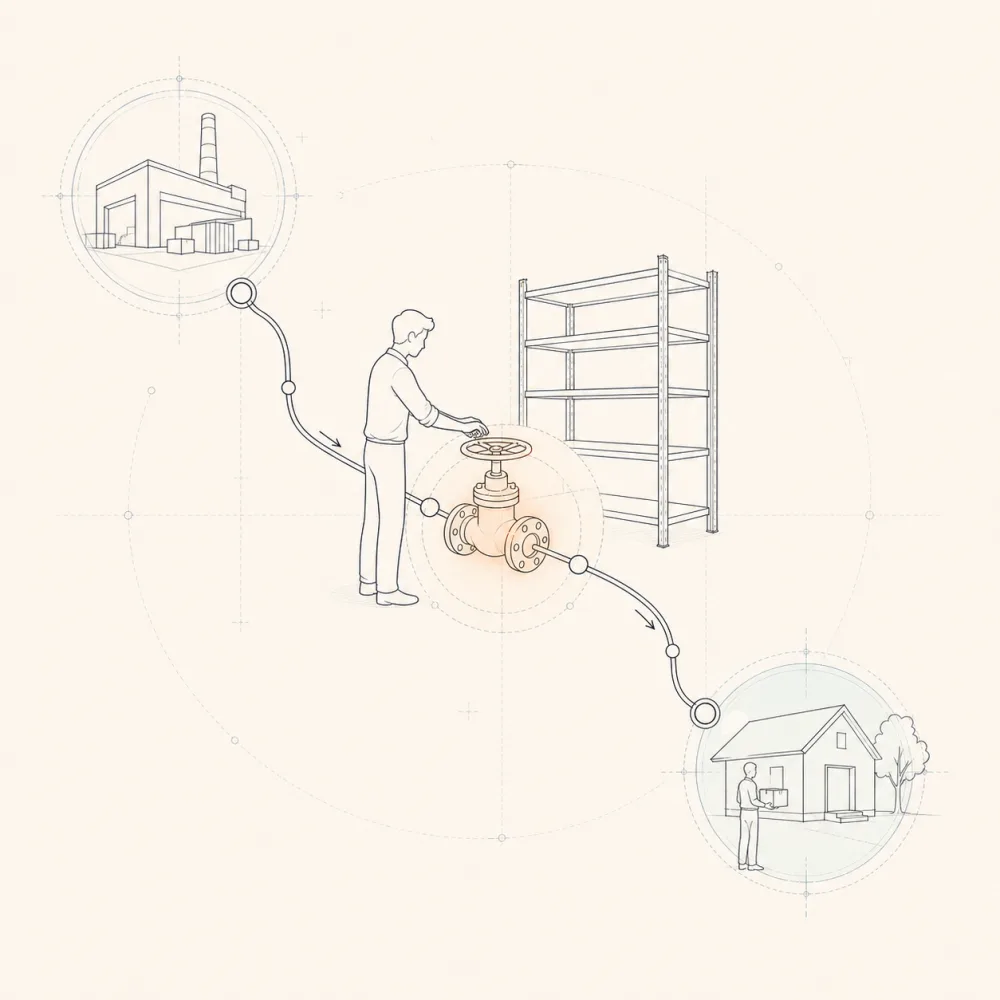
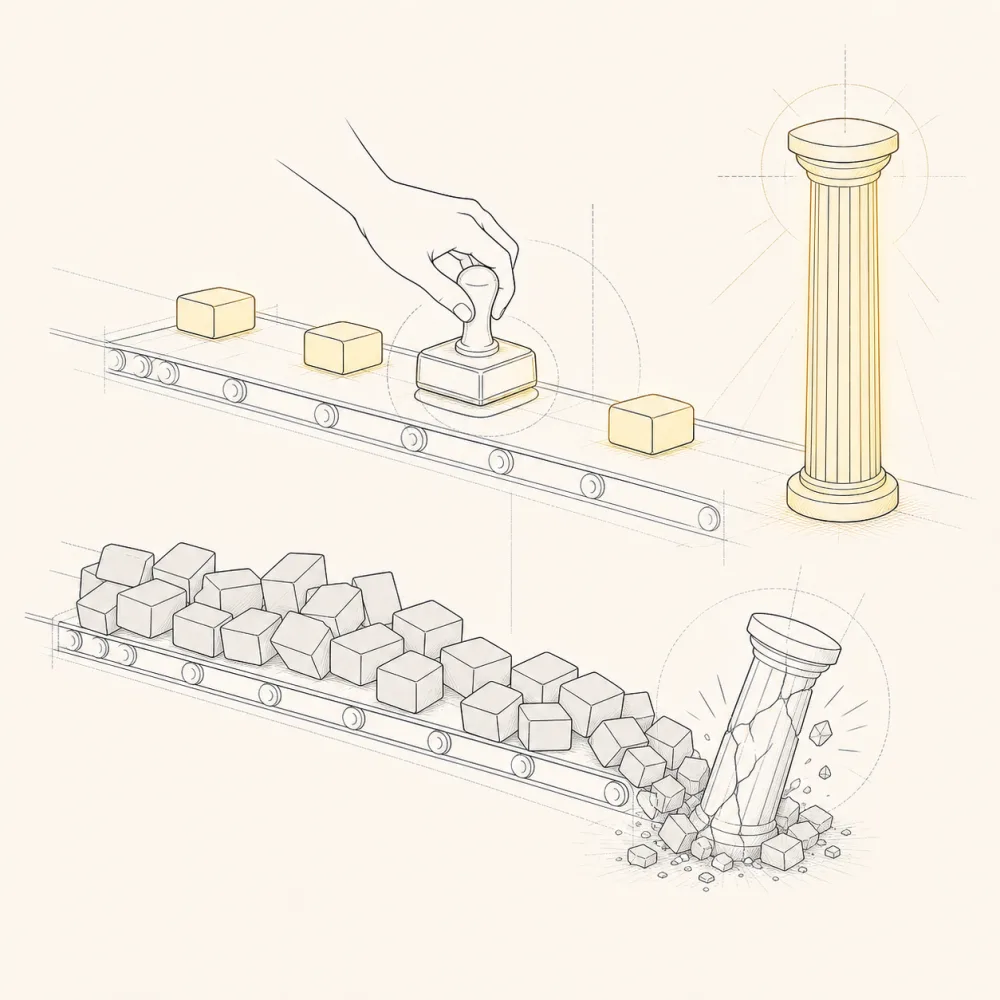
Stay with the asymmetry for a moment, because it is the engine of everything that follows. When labor gets cheap, two kinds of people can capture the gain. The owner of capital — David's employer — captures it automatically, by keeping the same output and shedding the payroll. The owner of an asset can capture it too, by using the cheap labor to build and run things that were uneconomic to build before. David belonged to neither group. He owned no capital and no asset; he owned only his hours, and his hours were the very thing being marked down. That is the precise definition of being on the wrong side of the transaction. You do not fix it by working harder or by becoming the world's best operator of someone else's machine. You fix it by crossing over to the side that owns something — and the cost of crossing over has never been lower, because the same machine that cheapened your labor is available to build your asset.
What "economically invisible" actually means
Let me be precise about the danger, because the headlines get it wrong. The headlines say: AI will cause mass unemployment. Maybe, maybe not — the aggregate evidence is still murky. When Acemoglu and colleagues studied the near-universe of online job vacancies in the United States, they found that establishments adopting AI quietly cut hiring in non-AI roles and rewrote the skill requirements of the jobs that remained, yet the economy-wide effect on employment and wages was still too small to measure cleanly. The disruption shows up at the level of the individual firm and the individual worker long before it shows up in the national statistics. By the time it is undeniable in the data, it will have been your problem for years.
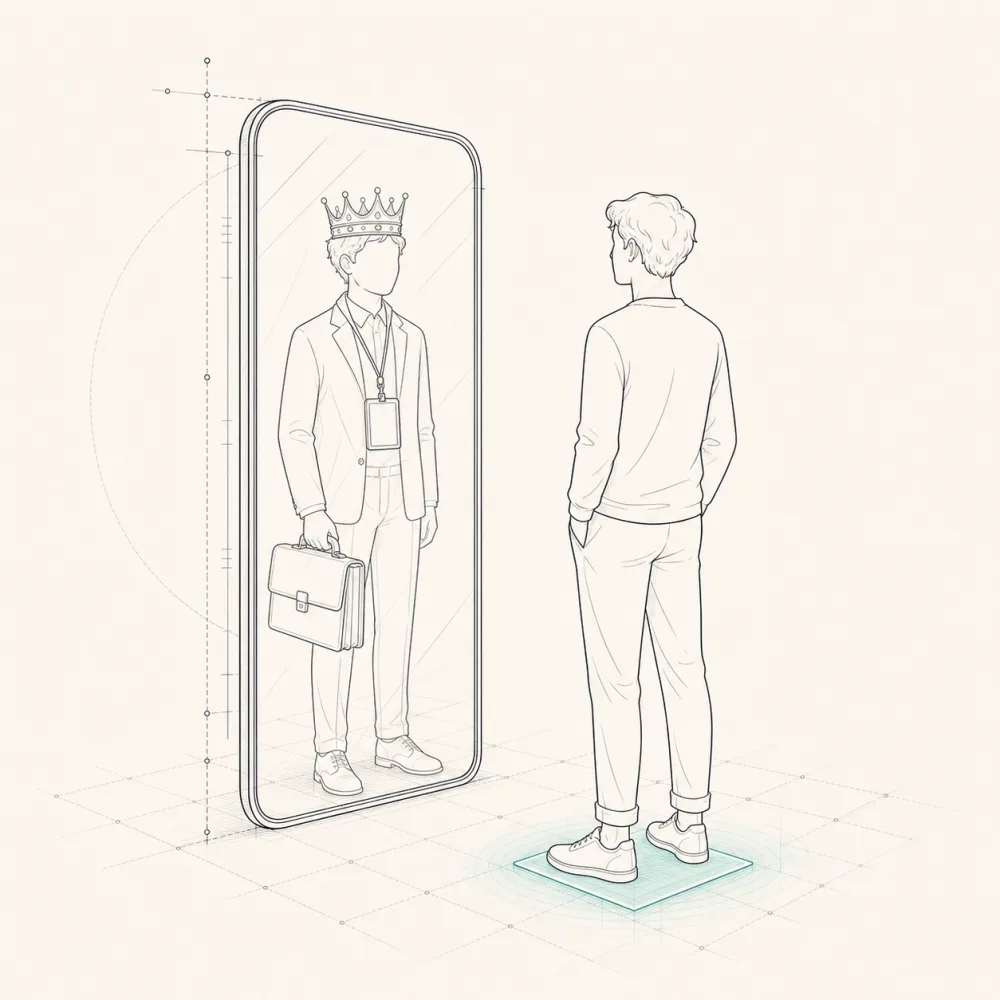
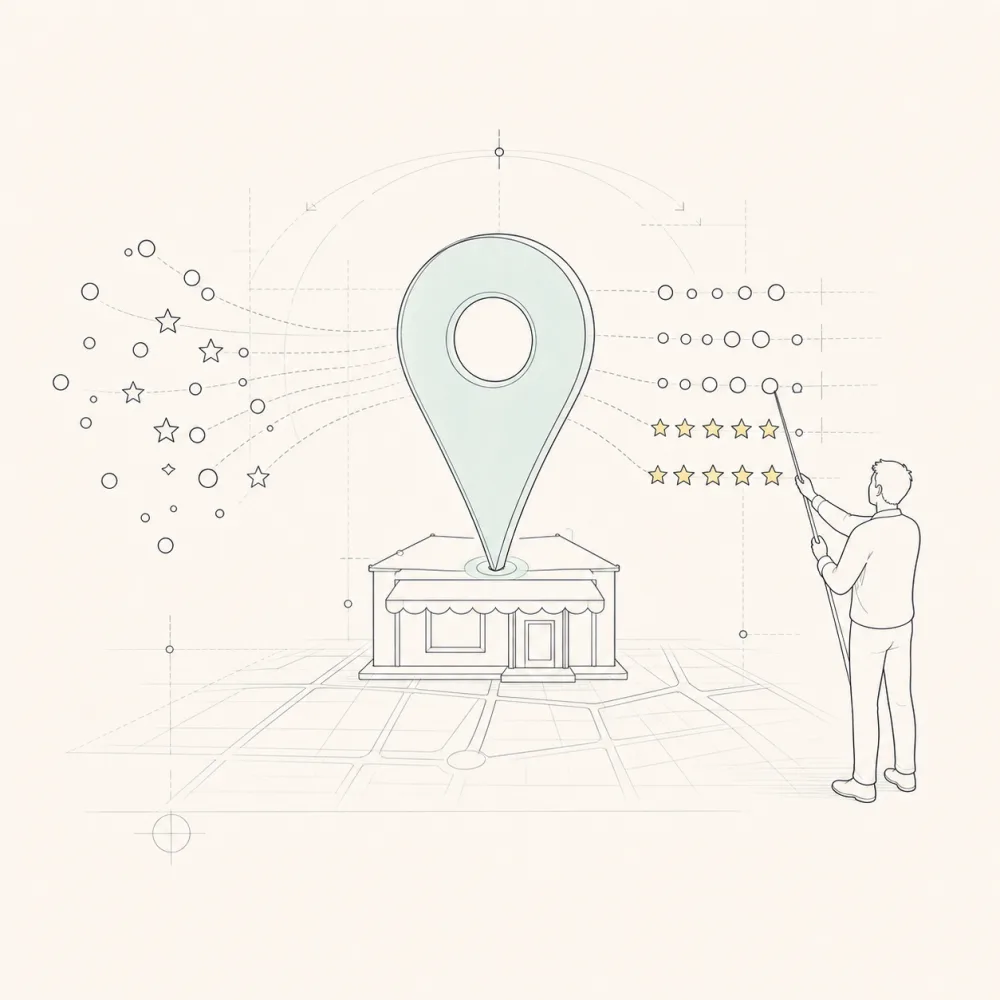
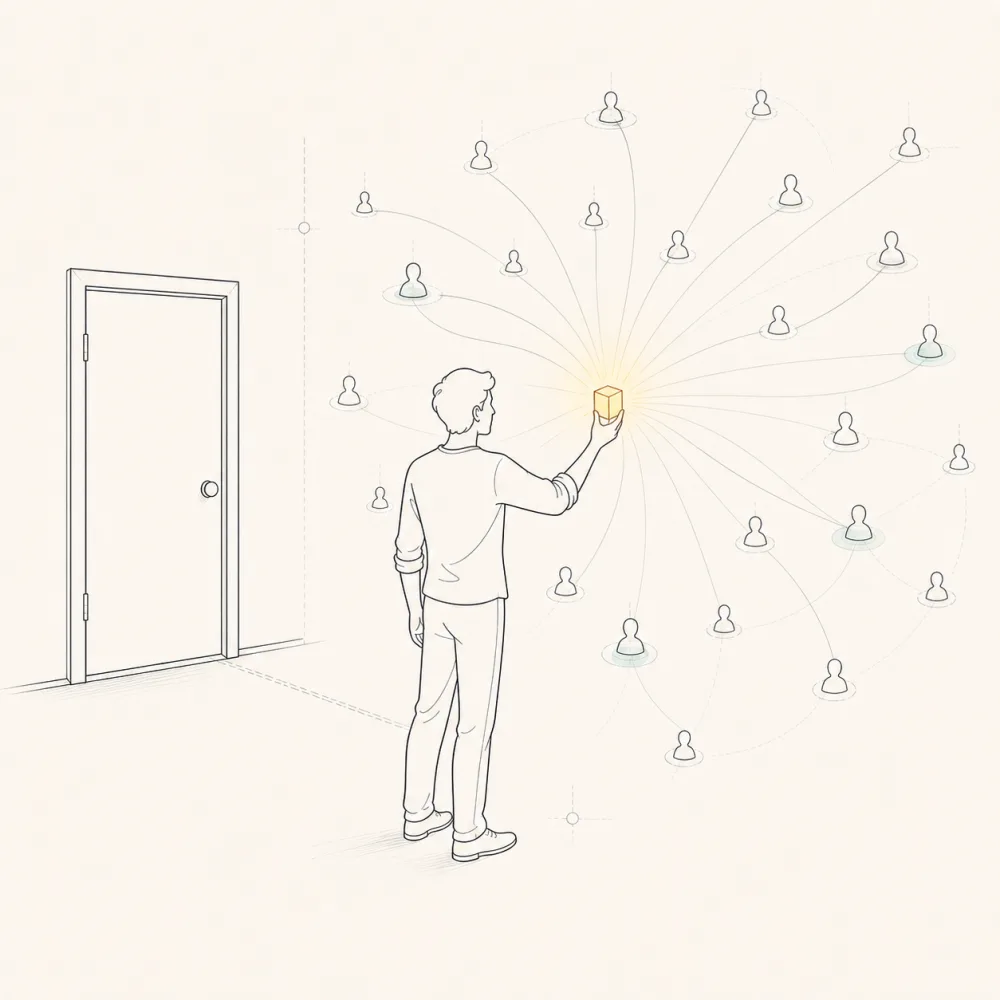
So unemployment is not quite the right fear. The right fear is something quieter and worse: economic invisibility. Economic invisibility is the condition of having no asset that a stranger can find, evaluate, and pay for. It is what David actually suffered. He had eleven years of real skill and zero public proof of it. His entire economic existence was legible to exactly one buyer — his employer — and the moment that buyer's math changed, David's eleven years became invisible to the market. Nobody could discover him. Nobody could test his judgment without hiring him first. He had built his whole career inside a building, and when the building stopped needing him, he walked out with nothing the outside world could price.
And notice the form the damage usually takes. It is rarely a clean firing. More often the work does not vanish; it gets sliced into thinner and cheaper pieces. The strategist becomes a freelancer brought in for the hard parts the model cannot finish, at a fraction of the old rate, with none of the security. This is the pattern I find most underappreciated: AI is not only firing white-collar workers, it is quietly turning them into gig workers — demoting durable, full-time professional roles into piecework that gets paid only when the machine gets stuck. The previous gig economy hit drivers and couriers. This one is coming for the degree-holders, the people who did everything the old rules told them to. The thinning of the job is the early warning. The invisibility is what is underneath it.
There is a well-documented reason most people stay in David's position until it is too late. Behavioral economists call it status quo bias, and its engine is loss aversion — the finding, established by Daniel Kahneman, Jack Knetsch, and Richard Thaler, that we feel the pain of giving something up far more sharply than the pleasure of gaining something of equal value. A salary is a possession. Building an asset is a gamble. So we cling to the possession and postpone the gamble, right up until the possession is taken from us anyway — at which point we have neither the salary nor the asset. The cruelest feature of the current moment is that it punishes exactly this caution.
The shape of the answer: publish small, owned assets
This book's answer is not "learn prompt engineering to keep your job." Keeping the job is defense, and defense against a falling cost curve is a losing game. The answer is to take the same AI that threatens your wage and turn it into your labor force — and to point that labor force at building things you own.
I am going to use one word for those things throughout this book, and I want to define it now so you do not mistake it for something smaller. To publish, in this book, means:
Turning an idea, judgment, process, taste, dataset, workflow, story, or tool into a public asset that a stranger can discover, evaluate, use, buy, share, or cite.
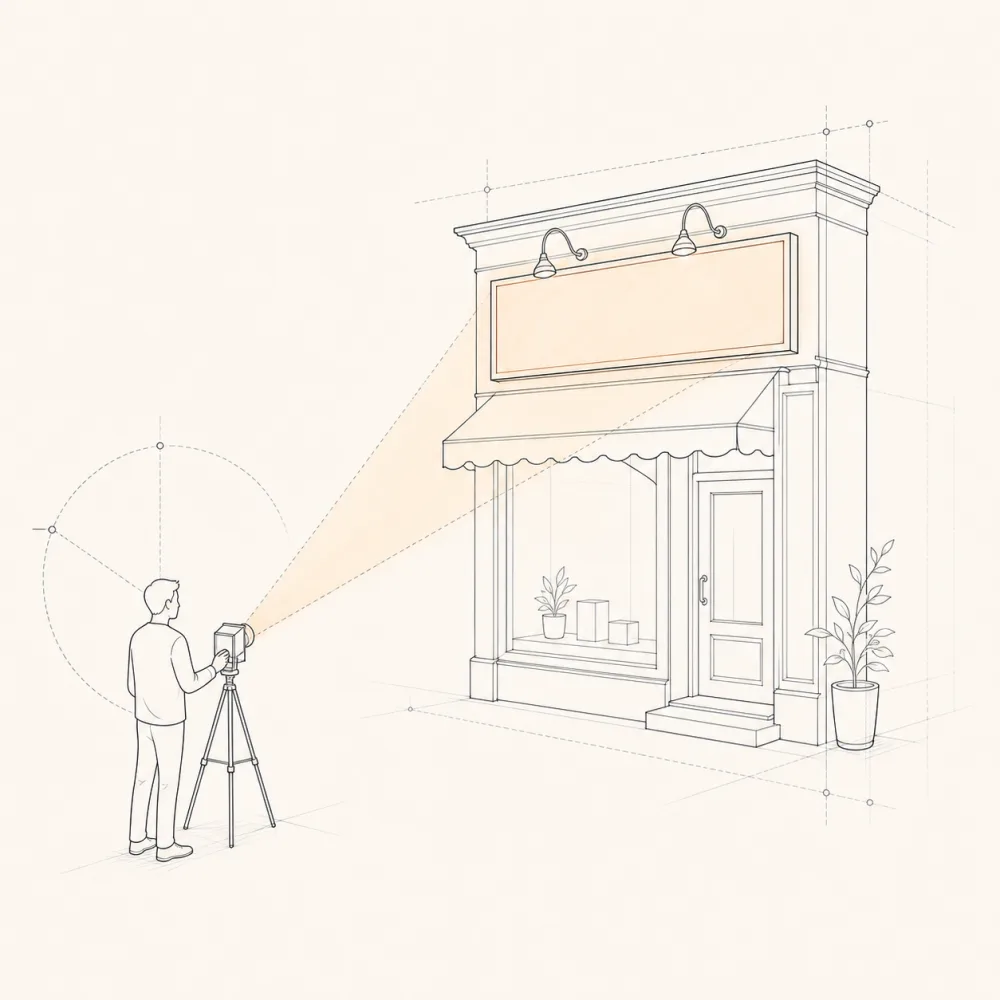
Notice what that definition excludes. It is not "posting content." It is not building a personal brand or becoming an influencer. A boring one-page website that tells you whether a service is down is a published asset. A $19 PDF that solves one painful problem for one specific kind of person is a published asset. A small tool, a template pack, a tiny game, an automation that runs an annoying task for a particular business — all published assets. Most of them have no face, no following, and no charisma attached. They just sit in the market, discoverable, doing one useful thing, collecting payment from strangers.
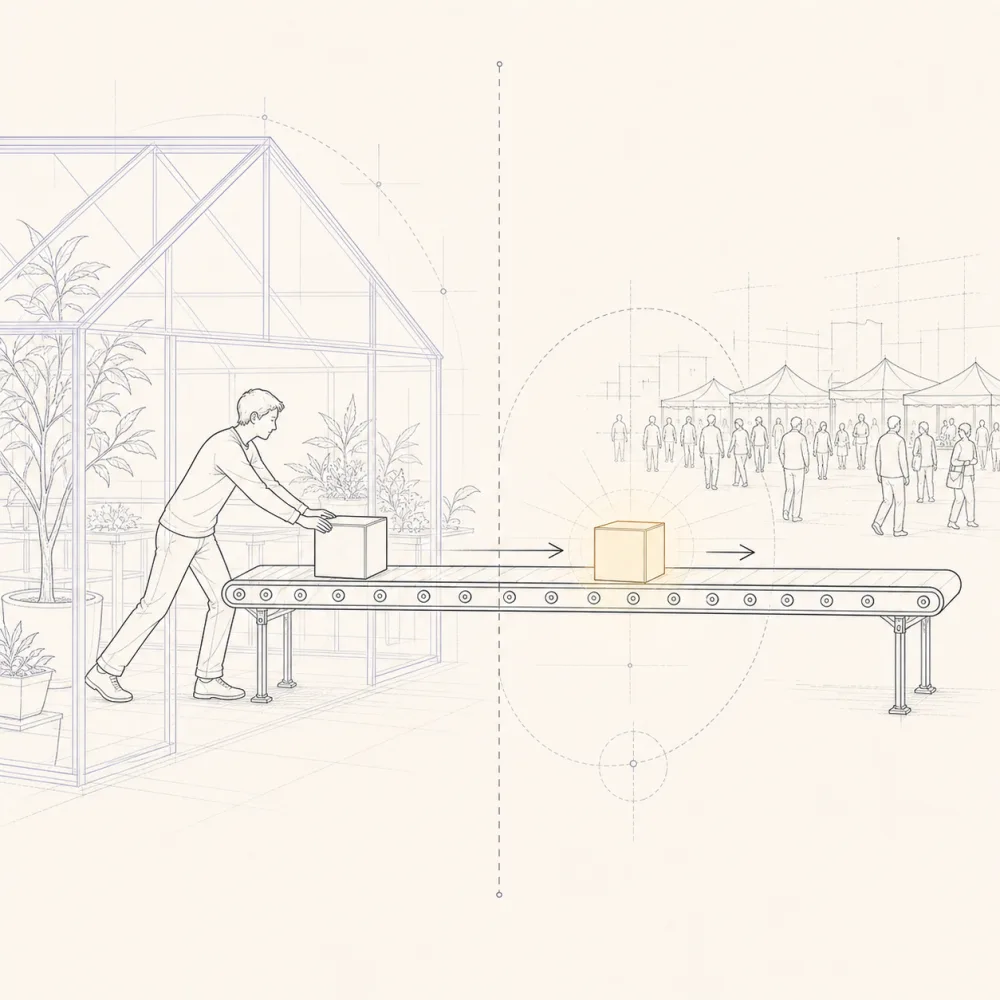
Let me make it concrete, because the abstraction is easy to nod along to and hard to feel. Imagine the most boring page on the internet: a single screen that does one thing, like generate a disposable email address you can use to sign up for something without handing over your real inbox. No brand. No newsletter. No founder's face. A person needs this exact thing, types the need into a search engine, lands on the page, uses it, leaves. Multiply that by a particular slice of recurring demand and the page earns a little from advertising or an affiliate link, every day, while its maker sleeps. One such page is a hobby. A dozen of them, each owning a sliver of recurring intent, is a small business that no employer can take away — because the maker owns the asset, not a job that produces the asset. That is the entire shape of this book in one image: not a louder voice, but a quiet machine you own, sitting in a market, serving a stranger.
The difference between that and David's eleven years is not talent. David had more skill in his little finger than a disposable-email page requires. The difference is ownership and visibility. David rented his judgment to one buyer who could stop buying. The page's maker turned a much smaller piece of judgment into something many buyers can find. Skill that only one employer can see is fragile no matter how deep it runs. A modest asset the whole market can see is durable no matter how small it starts.
I want to be honest with you about what this is and is not, because the genre this book sits in — "make money with AI" — is mostly garbage, and I would rather lose you now than lie to you. This is not passive income. It is not easy. It is not guaranteed. Publishing an asset that strangers will actually pay for still demands the scarcest things in the world: real judgment about which problem matters, taste about what "good" looks like, the patience to ship something complete, and the honesty to verify that it actually works. AI supplies the labor. It cannot supply the judgment. If you have no judgment, AI just helps you produce worthless things faster, and the market — which is colder and more honest than any boss — will ignore you.
I am writing this not as a guru but as someone running the experiment in public. I am an angel investor; I have spent fifteen years funding founders. I also build. I run a media operation, I am assembling a portfolio of small software tools, and the book you are reading was itself produced through an AI publishing pipeline I am building and openly debugging. When I show you my own projects later, I will tell you what is proven and what is still an experiment with no revenue to brag about. I would rather be useful than impressive.
You might reasonably ask: why now? People have been able to build side businesses for decades. What changed is that the cost of the labor required to build and run one has fallen off a cliff, and fallen most steeply for exactly the kind of cognitive work — writing, coding, designing, researching, supporting — that small assets are made of. The thing that used to stop a capable person from shipping an owned asset was not usually the idea. It was the sheer quantity of execution standing between the idea and a finished, market-ready thing: the code they could not write, the design they could not make, the copy they could not stand to draft, the support they could not staff. That wall of execution is the wall AI just lowered. The judgment was always yours. The labor to express it is what you could never afford, until now.
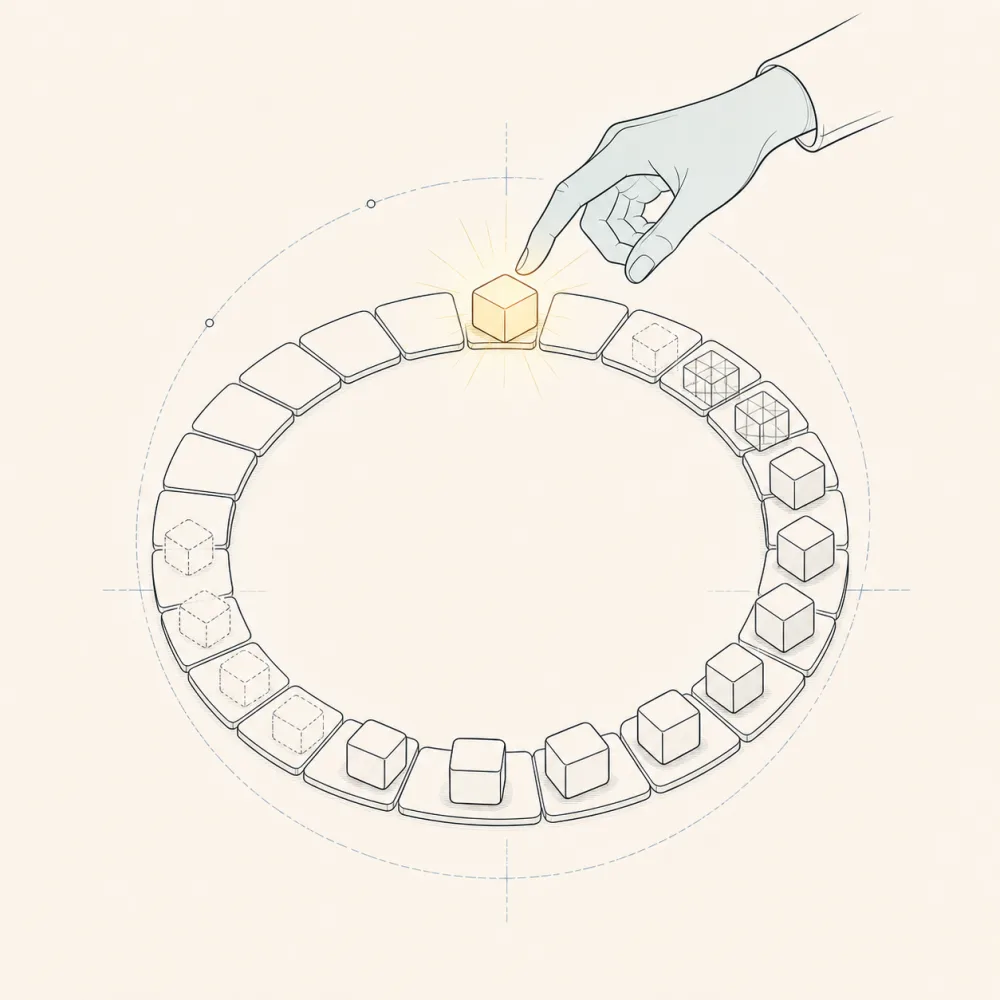
So here is the deal this book offers. AI is going to keep getting cheaper and better at doing what you currently get paid to do. You can spend the next few years defending a position that the cost curve is going to overrun anyway, or you can do what David eventually did — stop asking how to keep renting his judgment to one buyer, and start using machines to package that judgment into assets that many buyers can find. AI took his job. It turned out to be the most expensive favor anyone ever did him.
In the next chapter, we draw the first and most important distinction in the entire book: the difference between being unemployed and being jobless — and why almost everything you think of as your professional strength is, on closer inspection, borrowed.
劳动力成本崩塌,是有判断力之人的最大红利。
能取代你工作的机器,也能被你雇来替你干活。唯一的问题在于:产出归谁所有。
我有位朋友,姑且叫他大卫。他花了十一年磨练一项技能,结果这项技能在短短十一个月内变得一文不值。
他曾在一家中型营销公司担任资深文案与内容策略师。他不是那种只会批量生产博客文章的初级员工,而是真正的策略制定者。选题角度由他定,品牌调性由他把控,写手归他指导,客户异议由他交涉,连那些快要翻车的项目也是靠他救回来的。他的判断力,就是公司卖给客户的核心产品。后来,公司上线了一套内部 AI 写作系统。不到一年,原本需要大卫加四名写手才能撑起的团队,变成了大卫加一条提示词。年底算账时,公司做了道再简单不过的算术题:既然一个人加一个模型就能干完五个人的活,那还要五个策略师干嘛?留一个就够了——留谁不用问,自然是大卫,五个人里最强的那个——合同还得缩水;甚至连大卫这最后一个,留不留都还得再掂量掂量。
取代大卫的,并不是一个把活儿干砸了的机器人。取代他的,是他自己判断力的一个复刻版——成本只有原来的四十分之一,凌晨三点随叫随到,还从不提加薪。这才是没人提醒你的真相。真正的威胁不在于 AI 比你差,而在于它是个廉价、不知疲倦、比你稍逊一筹的复制品。偏偏绝大多数工作,根本不会为你比复制品高出的那 10% 品质买单。
大卫跟我讲这事时,本以为我会安慰他。我却告诉他:这其实是你职业生涯遇到的大好事,只不过你现在还站在交易的错误一方,所以看不清局势。
别问错问题,要问对问题
两百年来,每当新机器问世,焦虑的打工人都在问同一个问题:「我怎么保住饭碗?」这问题合情合理,却问错了方向,因为它默认了一套早已过时的游戏规则。这套规则假定你是劳动力的卖家,收入全靠把时间租给单一买家,人生目标就是哄着这个买家一直掏钱。
本书通篇围绕着一个更好的问题展开:「既然劳动力成本已经崩塌,有什么是我以前造不起、现在却能造出来的东西?」
这可不是什么励志话术,而是实打实的经济学规律。经济学家达龙·阿西莫格鲁和帕斯夸尔·雷斯特雷波提出了研究自动化最经典的框架,指出每当一项任务被自动化,就会有两股相反的力量在博弈。一是替代效应:机器接管了人类原本的任务,导致对该劳动力的需求和薪资双双下降。二是生产率效应:自动化省下的钱,会刺激那些尚未被自动化的任务产生新的劳动力需求。大卫感受到的正是替代效应。而生产率效应带来的红利,坐在打工者那一侧的人几乎从来分不到,因为想吃到这块肉,你必须拥有除自身时间以外的资产。
破局之道就在这里。劳动力成本崩塌让大卫的东家裁掉了多余的战略师,但同样也让大卫一个人就能指挥一百个初级写手、研究员、设计师和程序员——代价不过是一份软件订阅费。正是这套摧毁他工作的成本结构,反过来让他有机会去服务那些小市场——他以前供职的公司根本看不上这些苍蝇肉。机器不只是抢走了工作,更是直接派发了一支劳动力军团。悲剧在于,这支军团先发到了公司手里,而打工人只能默默接受现实,眼睁睁看着本该属于自己的生产力红利溜走。
请仔细琢磨这种不对称性,因为它是后续一切内容的引擎。劳动力变便宜后,有两类人能攫取收益。资本所有者——比如大卫的老板——自动获利:产出不变,工资支出却砍掉了。资产所有者也能获利:利用廉价劳动力去构建和运营那些过去在经济上不可行的项目。大卫哪边都不沾。他没有资本,也没有资产,只有自己的时间,偏偏时间正在贬值。这就是所谓「站在交易错误一方」的精确定义。想扭转局面,靠拼命干活没用,靠把别人的机器用得炉火纯青也没用。你必须跨到拥有资产的那一边去——而如今跨越的门槛前所未有地低,因为那台让你时间贬值的机器,同样可以用来建造你的资产。
「经济隐形」到底意味着什么
关于风险,我得把话说透,因为媒体标题党总是带偏节奏。媒体总爱喊:「AI 将导致大规模失业。」也许吧,也许不会——宏观数据依然混沌不明。阿西莫格鲁团队研究了美国几乎所有在线招聘岗位后发现:引入 AI 的企业确实在悄悄缩减非 AI 岗位的招聘,并改写了剩余岗位的技能要求,但在整体经济层面,对就业和薪资的影响仍小到难以精确量化。这种颠覆总是先落在具体企业和具体个人头上,很久之后才会反映在国家统计数据里。等数据板上钉钉时,这事儿早就折磨你好几年了。
所以,失业还不是最该怕的。真正可怕的是一种更隐蔽、更致命的状态:经济隐形。所谓经济隐形,就是你没有任何资产能让陌生人找到、评估并为之付费。这才是大卫真正的困境。他身怀十一年真本事,却拿不出任何公开证明。他的全部经济价值只对唯一买家——他的雇主——可见。一旦雇主的算盘变了,大卫十一年的积累在市场眼里就瞬间蒸发。没人能发现他,没人能在不雇佣他的前提下验证他的判断力。他把整个职业生涯都建在一栋大楼里,等大楼不再需要他时,他走出大门,手里没有任何外界能定价的东西。
还要留意这种伤害的典型形态。它很少表现为干脆利落的裁员,更多时候,工作并未消失,只是被切成了更薄、更廉价的碎片。策略师沦为外包自由职业者,只在模型搞不定的棘手环节被叫来救场,报酬大打折扣,保障化为乌有。这种趋势最被低估:AI 不仅在裁撤白领,还在悄悄把他们变成零工——把原本稳定、全职的专业岗位降级为计件活,只有机器卡壳时才给口饭吃。上一轮零工经济冲击的是司机和快递员,这一轮则直指高学历人群——那些完全按旧规则行事、做足了功课的人。工作被切碎只是预警,底下藏着的才是经济隐形。
为什么大多数人像大卫一样,直到太晚才醒悟?行为经济学里有个概念叫「现状偏见」,其驱动力是「损失厌恶」——丹尼尔·卡尼曼、杰克·克内奇和理查德·塞勒早已证实:失去某物的痛苦,远大于获得同等价值之物的快乐。薪水是囊中之物,打造资产则是赌博。于是我们死死抱住薪水,推迟那场赌博,直到薪水被人强行夺走——到头来既没了薪水,也没攒下资产。当下这个时代最残酷之处,就在于它精准惩罚了这种求稳心态。
破局之路:发布小型自有资产
本书给出的答案绝非「学点提示词工程好保住饭碗」。保饭碗是防守,而在成本曲线下坠时搞防守,注定满盘皆输。真正的答案是:把那个威胁你薪水的 AI 变成你的 AI 劳动力军团,指挥这支军团去建造属于你自己的东西。
我在书中会用一个词来指代这些东西,现在就得定义清楚,免得你把它想小了。在本书语境下,「发布」(publish)指的是:
将创意、判断、流程、品味、数据集、工作流、故事或工具,转化为一种公开资产,让陌生人能够发现、评估、使用、购买、分享或引用。
注意这个定义排除了什么。它不是「发帖子」,不是打造个人品牌,也不是当网红。一个简陋的单页网站,只告诉你某项服务是否宕机,这是可发布资产。一份售价 19 美元的 PDF,只为特定人群解决一个具体痛点,这是可发布资产。一个小工具、一套模板包、一款迷你游戏、一个替某类企业自动处理烦人琐事的脚本——全都是可发布资产。它们大多没有真人出镜,没有粉丝基础,也没有人格魅力加持。它们只是静静地待在市场里,等着被人发现,做好一件有用的事,然后从陌生人那里收钱。
抽象概念听着容易点头,难有切身体会,我来举个具体例子。想象互联网上最无聊的页面:单屏界面,只干一件事,比如生成一个一次性邮箱地址,方便你注册账号时不用交出真实收件箱。没品牌,没邮件订阅,没创始人露脸。有人正好需要这玩意儿,在搜索引擎里输入需求,点进页面,用完即走。把这种场景乘以某个特定的长尾需求,这个页面就能靠广告或联盟链接每天赚点小钱,哪怕创作者在睡觉也不耽误。做一个这样的页面是玩票;做十几个,每个都截获一小股持续意图,就构成了一门小生意——任何雇主都抢不走,因为创作者拥有的是资产,而非生产资产的岗位。这就是本书的核心图景:不是嗓门更大,而是一台安静的、属于你的机器,安放在市场里,为陌生人提供服务。
这跟大卫十一年的职业生涯相比,差别不在才华。大卫小拇指上的技能都比做个一次性邮箱页面所需的多得多。差别在于所有权和可见性。大卫把判断力租给了单一买家,人家随时可以停租。而那个页面的创作者,把小得多的判断力转化成了众多买家都能找到的东西。只有一位雇主看得见的技能,功力再深也脆弱不堪;整个市场都能看见的小资产,起步再低也坚韧持久。
我得跟你交个实底,说清这条路到底是什么、不是什么。因为本书所属的「用 AI 赚钱」门类里大多是垃圾内容,我宁可现在劝退你,也不想忽悠你。这不是被动收入,不简单,也不包赚。想让陌生人真金白银为你的资产买单,依然需要你拿出世上最稀缺的东西:对问题重要性的真实判断、对「好东西」的审美品味、把东西做完整的耐心,以及验证其确实管用的诚实。AI 提供劳动力,但不提供判断力。如果你自己没有判断力,AI 只会帮你更快地制造废品,而市场——比任何老板都冷酷、都诚实——会直接无视你。
我写这本书不是以导师自居,而是作为一个公开做实验的人。我是天使投资人,资助创业者已有十五年。我自己也下场做东西:运营一家媒体,正在搭建一系列小型软件工具组合,就连你手里这本书,也是用我正在开发并公开调试的 AI 发布流水线做出来的。后面展示我自己的项目时,哪些已经跑通、哪些还是没营收的实验,我都会如实相告。比起显得厉害,我更想对你有用。
你可能会问:为什么是现在?人们搞副业已经搞了几十年了。变化在于:构建和运营副业所需的劳动力成本出现了断崖式下跌,而且跌得最猛的恰恰是构成小型资产的核心脑力劳动——写作、编程、设计、调研、客服。过去阻碍能人发布自有资产的,通常不是点子,而是从点子到成品之间那道巨大的执行鸿沟:写不出的代码、做不来的设计、憋不出的文案、雇不起的客服。AI 刚刚推平的,正是这道执行之墙。判断力从来都是你的,只是把它表达出来的劳动力成本,你以前付不起,现在付得起了。
所以,本书向你发出这样一份邀约:AI 会越来越便宜、越来越好地取代你现在赖以谋生的工作。你可以花接下来几年死守一个注定被成本曲线碾碎的阵地,也可以像大卫后来那样——别再琢磨怎么把判断力租给单一买家,转而用机器把判断力打包成众多买家都能找到的资产。AI 抢了他的饭碗,结果却成了别人给他帮过的最昂贵的忙。
下一章,我们来厘清全书最重要的一组区分:失业与出局有何不同——以及为什么仔细审视之下,你以为属于自己的职业优势,几乎全是借来的杠杆。
Stop Renting Your Judgment别再出租你的判断力
The machine that replaced you is for hire. The only question left is who owns the output — you, or someone who moved first.那台取代你的机器,正等着被你雇用。剩下的唯一问题是:产出归谁——是你,还是先你一步动手的人。
 Outlier Investor投资异类
 Gallery画廊
Illustrations from the Book书中插画

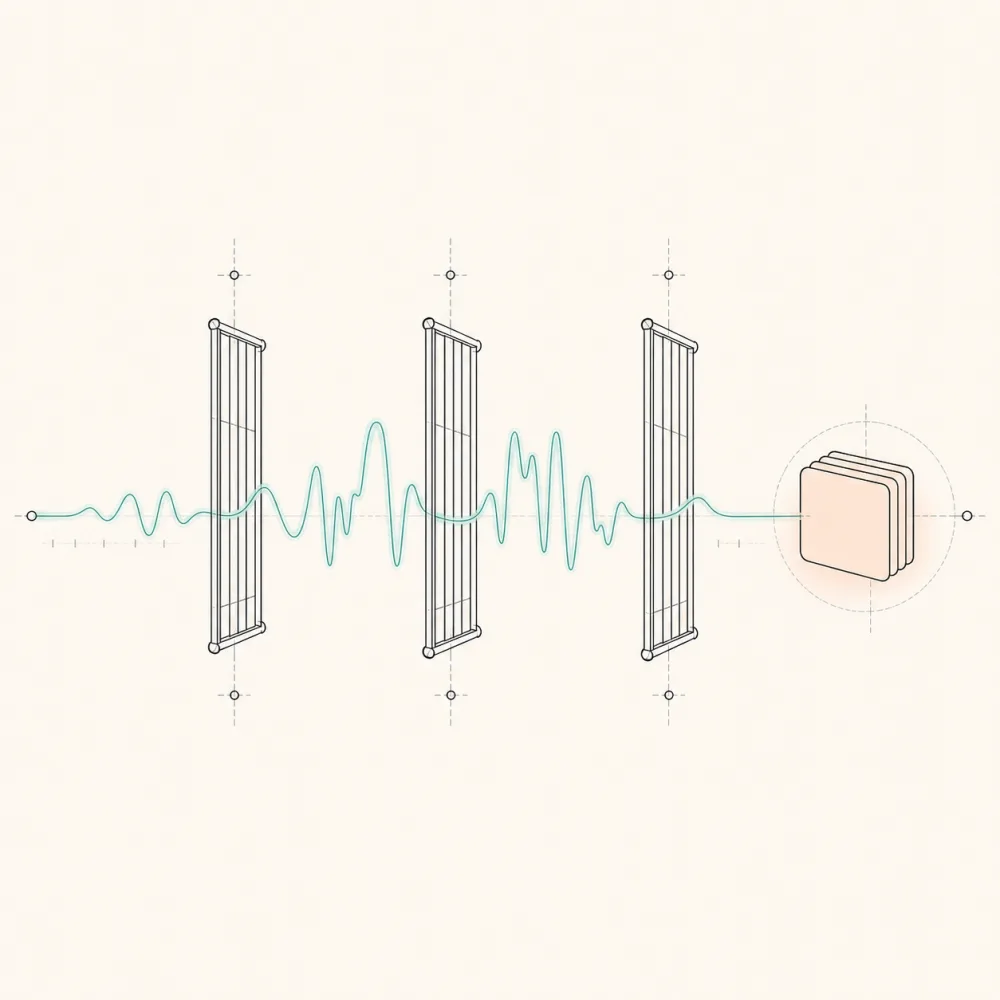
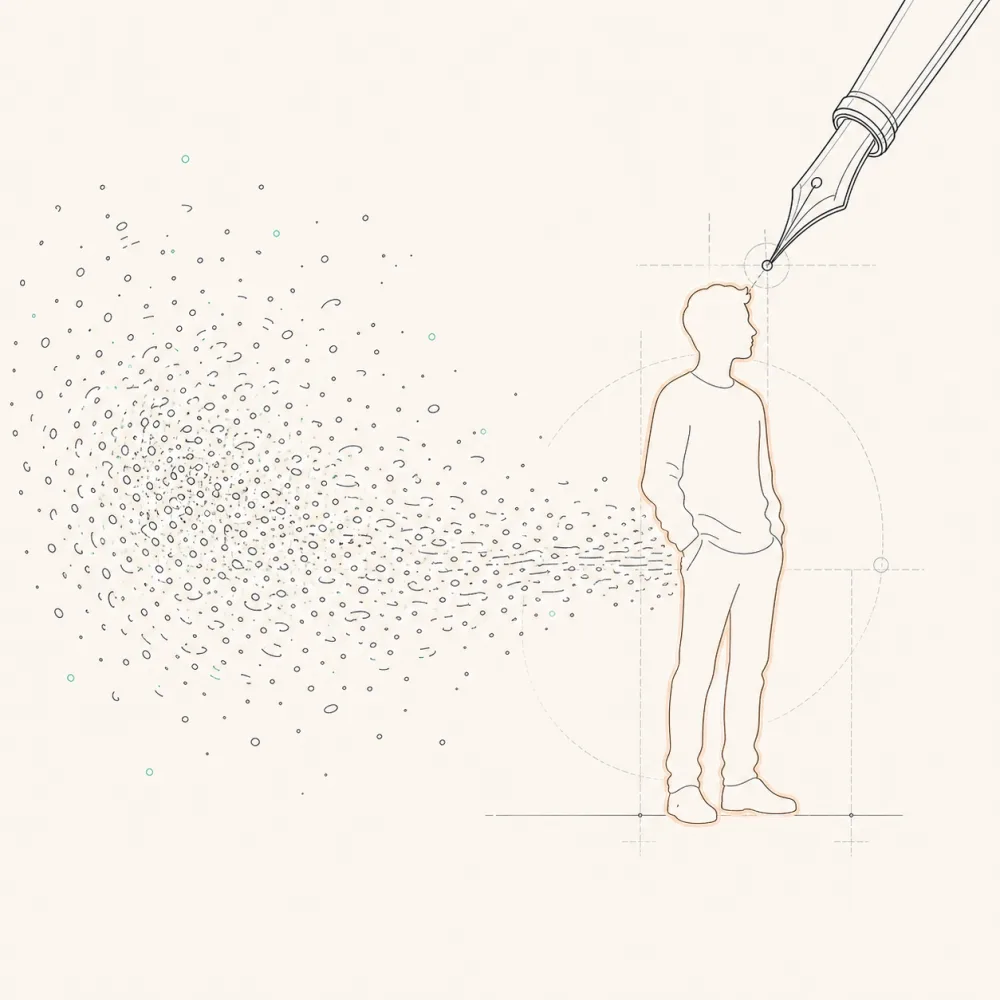
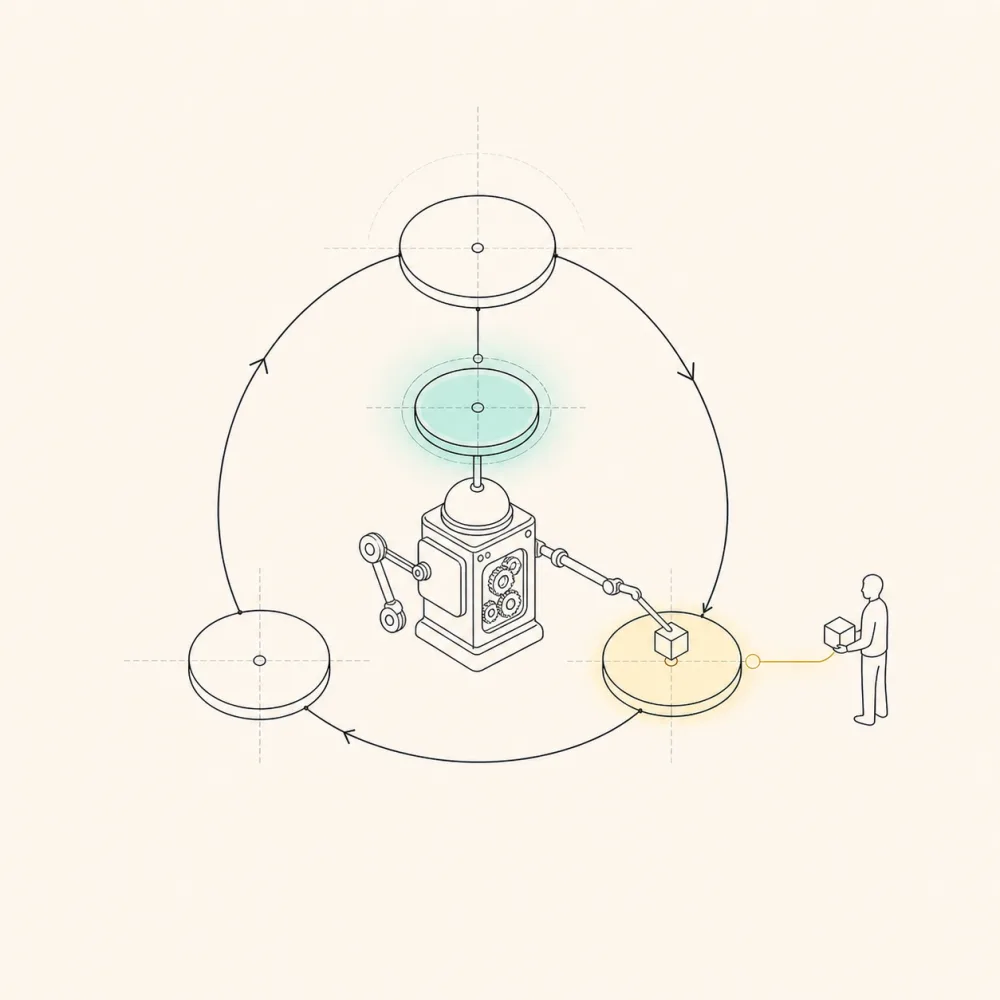
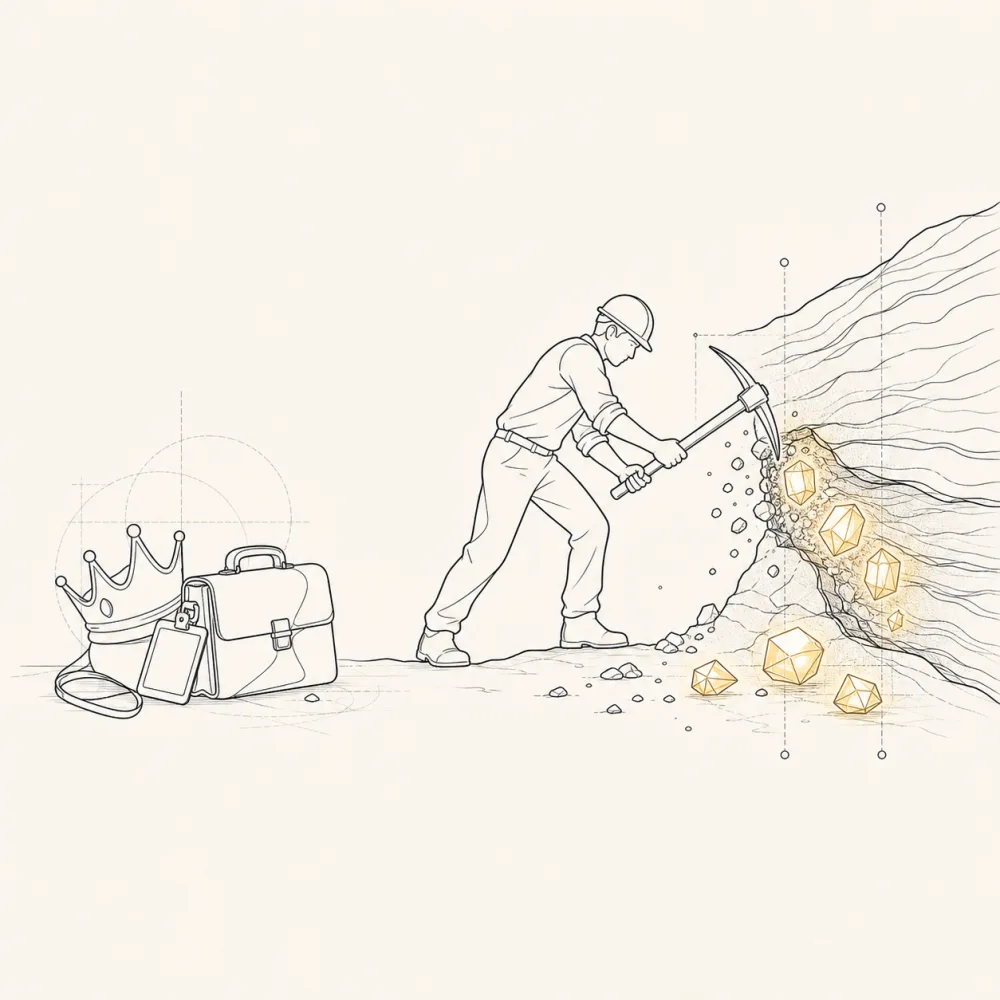

Contents目录
Full Table of Contents全书目录
The complete structure — front matter to back.完整的篇章结构——从引言到附录。
Part I第一部 · Why This Is Opportunity为何这是机会
- Ch 1第1章 Jobless Is Not Unemployed没工作不等于失业
- Ch 2第2章 The Markets Companies Ignore大公司看不上眼的市场
- Ch 3第3章 The One-Person Break-Even Revolution一人盈亏平衡点革命
Part II第二部 · Publish & Command AI发布并驾驭 AI
- Ch 4第4章 Publish Means Ship发布即交付
- Ch 5第5章 How to Squeeze Your AI Co-Founder如何榨干你的 AI 联合创始人
- Ch 6第6章 The Publishable Asset Spectrum可发布资产光谱
Part III第三部 · The Asset Menu I资产菜单(上)
- Ch 7第7章 Tiny Niches, Real Money极小切口,真金白银
- Ch 8第8章 The Boring One-Page Website那个无聊的单页网站
- Ch 9第9章 One-Page Utilities and Tool Clusters单页工具与工具矩阵
- Ch 10第10章 Casual Games休闲游戏
- Ch 11第11章 Dropshipping and the AI Store Operator代发货与 AI 店铺操盘手
- Ch 12第12章 Etsy Digital ProductsEtsy 数字产品
- Ch 13第13章 Ebooks, PDFs, and Paid Knowledge Products电子书、PDF 与付费知识产品
Part IV第四部 · The Asset Menu II资产菜单(下)
- Ch 14第14章 Local Commercials本地商业广告
- Ch 15第15章 Local SEO本地 SEO
- Ch 16第16章 YouTube and YPPYouTube 与 YPP
- Ch 17第17章 Douyin Commerce抖音电商
- Ch 18第18章 AI MusicAI 音乐
- Ch 19第19章 AI Images, Comics, and Visual Product LinesAI 图像、漫画与视觉产品线
- Ch 20第20章 AI Modules, Workflows, and Micro-SaaSAI 模块、工作流与微型 SaaS
Part V第五部 · Make It Compound让资产复利
- Ch 21第21章 Your Old Job Is a Product Mine你的旧工作是一座富矿
- Ch 22第22章 Build for Discovery, Not Applause为被发现而造,别为掌声而造
- Ch 23第23章 The Anti-Slop Rule反 AI 垃圾法则
Part VI第六部 · Get to Work动手去做
- Ch 24第24章 Your First 30-Day Asset你的第一个 30 天资产
- Ch 25第25章 The Portfolio of Tiny Machines微型机器组合
Bonus花絮
Behind the Scenes幕后花絮
How this book was prompted into existence — and how the pipeline took it from there.这本书是怎么被一句话「prompt」出来的——之后,流水线又如何接管了一切。
How I Prompted This Book我是如何 Prompt 出这本书的
This book had no full outline. It all started with a title.
At first, I asked the AI just one thing: "If my fourth book were called Publish or Jobless, what do you make of it? What am I trying to say? How should it be written?"
I didn't lay out my thinking up front. The reason is simple: if you hand a model your judgment, your framework, and your stance all at once, it will only tidy things up along the track you've already laid — it can't give you a genuinely outside view.
So step one was to give it nothing but the title, and see what it could read into it on its own.
Its first reading was this: in the age of AI, ability that stays trapped inside a company, a résumé, or a chat log earns no compound interest, gets no market proof, and holds no external pricing power. To publish, then, isn't just to post articles — it's to turn your judgment, experience, methods, and work into public assets.
An interesting answer. It got part of it right, but it wasn't enough.
What I wanted to say was sharper. I didn't just want to write about "personal branding" or "speaking in public." What I really meant was this: if AI pushes you out of your job, don't just sit there afraid, and don't merely learn a few prompts to cling to your paycheck. Turn it around — treat AI as your labor force and go after the small markets a ten-person team once found too small, that a company found not worth it, but that one person can live very comfortably on.
A market that earned a hundred, three hundred, even five hundred thousand dollars a year used to be unable to support a company. A ten-person team would turn up its nose, because salaries, management, support, sales, an office, process — it's all organizational cost.
But what about one person plus an AI labor force?
A hundred thousand dollars is no longer a small business. It's the first foundation stone of freedom.
So I told the AI what I really thought: how does a person displaced by AI flip the table and squeeze an AI labor force to earn more than they did as an employee? A one-person company doesn't have to chase unicorn status. What truly matters in the age of AI is the smaller, narrower, more specific niche market. The things companies once overlooked, one person can now do — and do well.
This was step two: first hear the AI's independent reading of the title, then press my real intent on top of it, and let the two fuse.
Once fused, the book's core became clear:
AI doesn't just take work away — it also knocks out the break-even point of entrepreneurship. Markets once too small, not worth a company's time, are now exactly right for one person plus AI.
But this still wasn't the final framework.
After the AI produced a second-draft skeleton, I realized that staying at the level of "public assets," "an AI labor force," and "small markets" still wasn't enough. What readers are really anxious about is: so what, exactly, can I do?
So I began adding a third layer of inspiration.
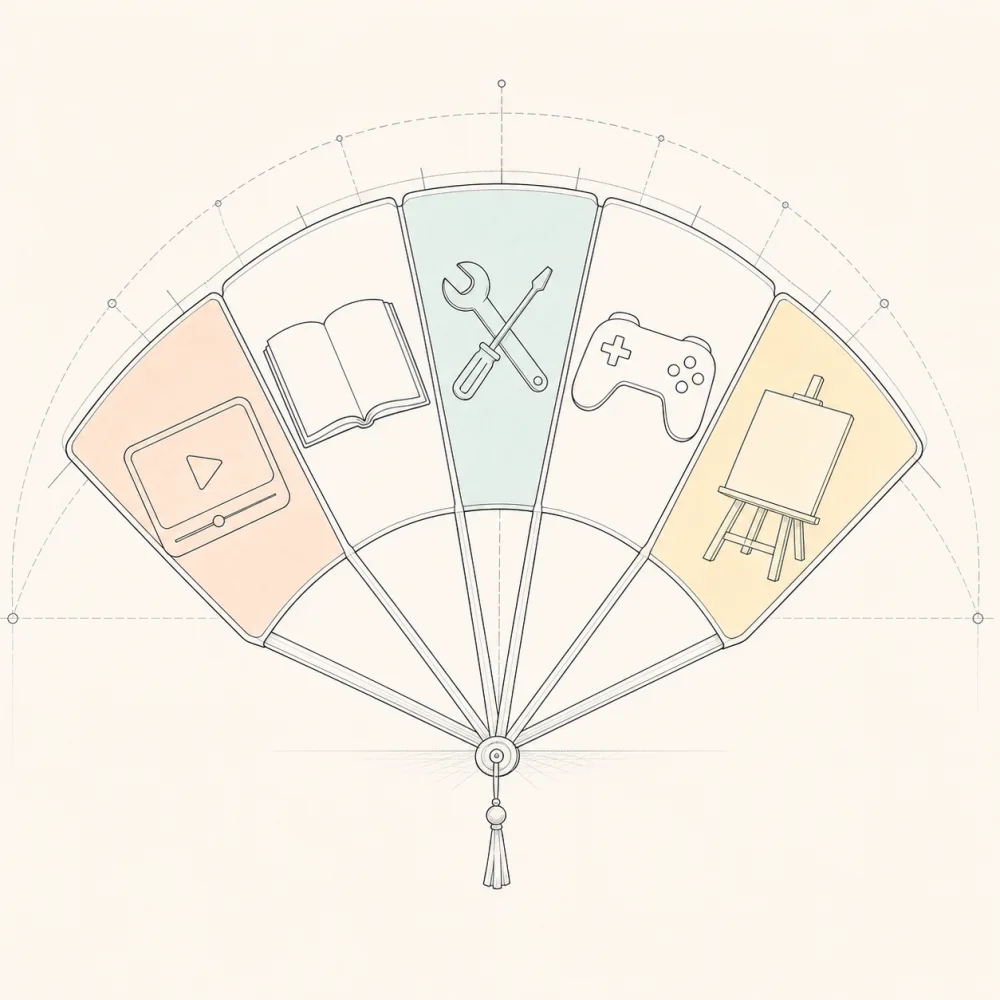
I said: publish shouldn't be limited to writing books, posting articles, or making videos. It can be a boring but profitable one-page website, a single-purpose tool, a casual game, a dropshipping store, an Etsy digital product, an ebook, local-business ads, local SEO, a YouTube/YPP channel, a Douyin shop — or AI music, AI images, comics, resource packs, AI modules, or workflow systems.
Each track deserves its own chapter.
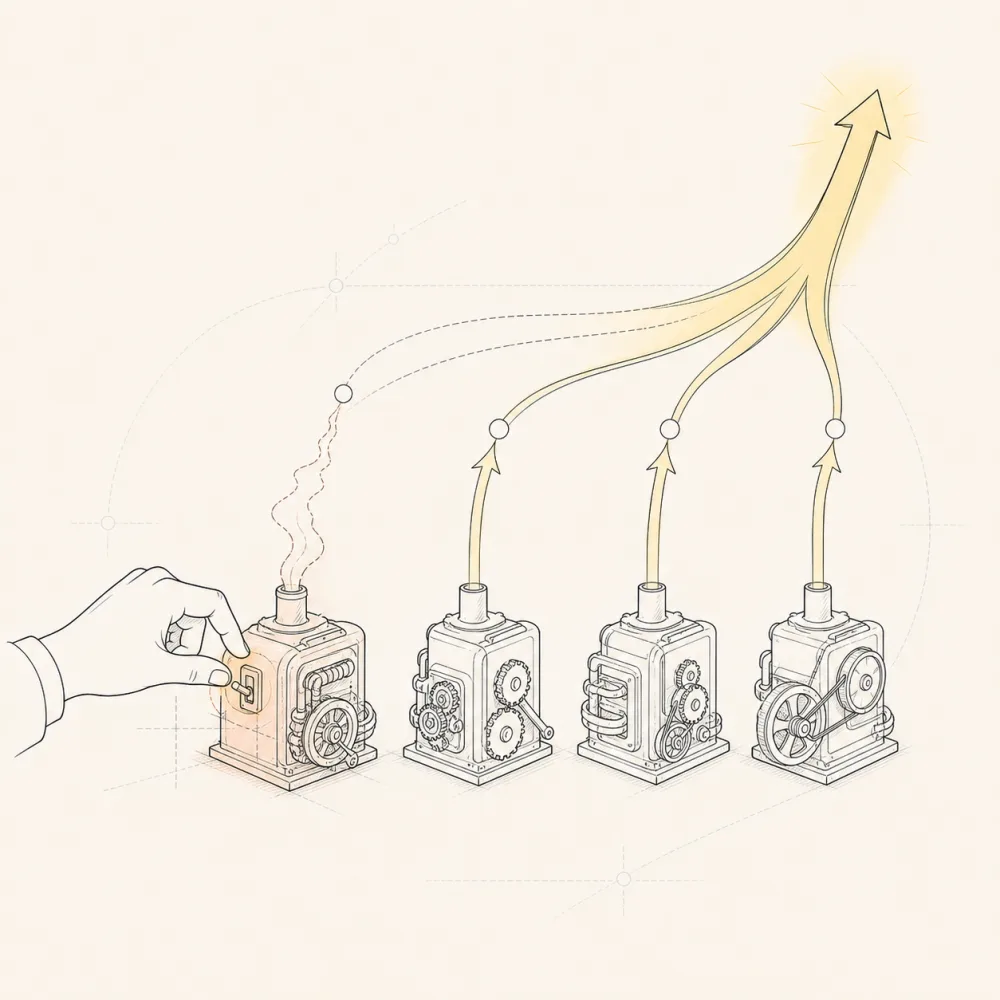
The point isn't for everyone to do a dozen things — it's that AI lets one person run many experiments in parallel. One person used to be able to hold only one job; now you can treat AI as your researcher, programmer, designer, editor, support agent, operations assistant, and sales-page writer, and have it help you explore many small markets at once.
This was step three: once a rough framework exists, keep feeding in new inspiration to make it thicker and more concrete — until it becomes a book you can actually hand to a team of agents to write, chapter by chapter.
So the prompt for this book wasn't done in one shot. It came in roughly three steps.
Step one: give only the title, and let the AI offer its own view.
The value here is to keep the AI from being bound by my intent from the start. A good title is itself a compressed package of ideas; let the AI decompress it first, and I get to see meanings I hadn't yet noticed myself.
Step two: after hearing the AI's independent take, tell it what I really want to say.
The value here is fusion. The AI supplies the outside view, I supply the author's intent, and only when the two collide does a framework grow that's better than either could have devised alone.
Step three: once the framework exists, keep adding inspiration, cases, and tracks.
The value here is turning a beautiful idea into an executable outline. A book can't live on one clever line; it needs chapters, cases, a reader's path, fact-checking tasks, and a division of writing labor.
If this book is about "how to turn AI from the machine that replaces you into a legion that works for you," then the act of creating it was a small sample of exactly that.
I didn't let the AI think for me, and I didn't treat it as a typist that only takes orders.
What I did was: give it a title with tension and let it judge freely; then hand it the truth so it could help me organize; and finally keep feeding in new inspiration and business instinct so it could break the material apart, sort it, and expand it into structure.
This matters more than "writing one perfect prompt."
Many people wrongly believe the key to an AI workflow is a single magic prompt. It isn't. A genuinely useful prompt is often not one sentence but a conversation that deepens by degrees.
You first let the AI see a direction, then let it tell you what it sees, then tell it where it's right, where it falls short, and where the real intent lies. In the end, together, you compress a vague idea into a work that is executable, publishable, divisible into tasks, and verifiable.
This is how I prompted this book.
Not a single command, but an act of modeling it together.
And this is exactly what the book sets out to prove: the most powerful use of AI is not to help you avoid thinking, but to amplify your thinking into work.
After the Prompt, the Pipeline Takes Over
There's a detail that's easy to miss: the prompt is only the starting point, far from the whole of it.
For me, the key isn't what "spell" I cast at the AI, but that behind that one sentence sits a fully automated ebook production pipeline.
By now this process is honed to the bone: before bed I give it a title, and hand the rest to the AI. About three hours later I wake up, and a typeset ebook — cover and chapter illustrations done, multiple languages prepared — is sitting there, waiting only for my final call.
How does it run, exactly?
First the AI uses the title to set the book's name, subtitle, and core thesis, and builds out the full framework and chapter beats.
Then a dozen-odd writing agents start in parallel, each drafting a chapter. They search the web in real time, draw on internal material and a vector database, and run a local dedup check — to avoid clashing with my older work and to keep them from quietly rewriting old content in new clothes.
Once the first draft lands, a fresh batch of agents takes over for fact-checking, logic, copy-editing, and structural review. Writers can't grade themselves; a cold second pair of eyes has to do it.
Then comes the preface. This isn't an ordinary opening; it's a three-in-one of book summary, reader promise, and marketing copy. Whether a reader keeps going often comes down to these few pages.
On language: if the draft is in English, a Qwen model transcreates it into Chinese; if it's already Chinese, Qwen polishes it to a native level. The rule is simple: anything meant for Chinese readers must pass through Qwen at the end, washing out translation-ese, AI flavor, and stiff rhythm.
The visuals follow in step. AI generates the cover and the chapter illustrations. The cover governs the first-glance urge to buy; the illustrations give the reading room to breathe, so it never collapses into a wall of text.
Typesetting and packaging run automatically by preset rules. Multiple languages, fonts, heading levels, table of contents, captions, blockquotes, margins — all have fixed rules, no need to tune from scratch each time.
The multilingual editions are generated together. English, Simplified and Traditional Chinese, with more to come. This is not mere translation: fonts, layout, cover lettering, punctuation, even reading rhythm all have to be re-adapted per language.
Finally, the system updates the database, organizing the manuscript, metadata, publication status, version records, cover, PDF, illustrations, and pending items, then packages it all and sends it to me for review.
Once review passes, it enters distribution. Amazon, Google Play Books, Apple Books, Gumroad and other platforms list it automatically. At the same time, my personal website generates a dedicated page for the book — to catch search traffic, offer a purchase entry, and accumulate long-term brand equity.
So this book is nothing as simple as "I write a prompt and the AI conjures up a book."
More precisely, I used a title to start a publishing machine.
The prompt provides the ignition. Everything after — research, dedup, writing, fact-checking, polishing, translation, cover, illustrations, typesetting, ingestion, the review package, listing, and the dedicated page — is taken over by this AI workflow.
This is also why I had the nerve to write Publish or Jobless.
I work this way myself.
This isn't a daydream about the future or empty talk about concepts. Every night I give a direction; every morning I inspect the finished product. The AI didn't help me dodge judgment — it amplified my judgment into a system that can keep producing work.
Publishing a book used to take a team, a budget, a schedule, and a great deal of human coordination; now one person can hold up a small publishing house.
This publishing house isn't in an office.
It grows inside the workflow.
这本书没有完整大纲,一切始于一个标题。
起初,我只问了 AI 一句:「如果第四本书叫 《Publish or Jobless》,你觉得怎么样?我想传递什么?该怎么写?」
我没把想法和盘托出。原因很简单:若一上来就把判断、框架、立场全塞给它,它只会顺着我的轨道整理,给不出真正的外部视角。
所以第一步,我只给标题,看它自己能读出什么。
它的第一版理解是:AI 时代,能力若只困在公司内部、简历或聊天记录里,就没有复利,没有市场证明,也没有外部定价权。所谓 publish,不只是发文章,而是把判断力、经验、方法论和作品变成公开资产。
这回答有意思,说中了一部分,但不够。
我想表达的更锋利。我不想只写「个人品牌」或「公开表达」。我真正想说的是:如果 AI 把你挤下岗位,别光顾着恐惧,也别只学几个提示词保饭碗。你该反过来把 AI 当劳动力,去做那些过去十人团队嫌小、公司嫌不值、但一个人足以活得滋润的小市场。
以前一个市场年赚十万、三十万甚至五十万美元,养不起公司。十人团队看不上,因为工资、管理、客服、销售、办公室、流程,全是组织成本。
但如果是一个人加一支 AI 劳动力呢?
十万美元就不再是小生意,那是自由的第一块地基。
于是我把真想法告诉 AI:被 AI 替代的人,如何反客为主压榨 AI 劳动力,赚得比打工多?一人公司未必要做独角兽。AI 时代真正重要的,是更小、更窄、更具体的 niche market。过去公司看不上的事,现在一个人能做得很滋润。
这是第二步:先听 AI 对标题的独立理解,再压入我的真实意图,让两者融合。
融合后,书的核心清晰了:
AI 不只拿走工作,还打掉了创业的盈亏平衡点。过去太小、不值得公司做的市场,现在刚好适合一个人加 AI 去做。
但这还不是最终框架。
AI 给出第二版骨架后,我意识到,若只停留在「公开资产」「AI 劳动力」「小市场」这些概念上,依然不够。读者真正焦虑的是:那我到底能做什么?
于是我开始补第三层灵感。
我说,publish 不该局限于写书、发文、做视频。它可以是一页无聊但赚钱的网站、一个单页工具、一款休闲游戏、一个 dropshipping 独立站、Etsy 数字产品、电子书、本地商家广告、local SEO、YouTube/YPP 频道、抖音小店,也可以是 AI 音乐、AI 图像、漫画、资源包、AI 模组或工作流系统。
每个赛道都该是独立一章。
不是让人人都做十几件事,而是 AI 让一个人能并行试验多条线。过去一人只能打一份工,现在你可以把 AI 当研究员、程序员、设计师、编辑、客服、运营助理、销售页写手,让它帮你同时探索多个小市场。
这是第三步:初步框架出来后,继续喂入新灵感,让框架变厚、变具体,变成一本真正能派 agent 分章写作的书。
所以,这本书的 prompt 不是一次性完成的,大致分三步。
第一步:只给标题,让 AI 自己发表看法。
这步的价值是避免 AI 一开始就被我的意图绑死。好标题本身就是思想压缩包,先让 AI 解压,我能看到自己尚未察觉的含义。
第二步:听完 AI 的独立看法,再告诉它我真正想表达什么。
这步的价值是融合。AI 提供外部视角,我提供作者意图,两者碰撞,才会长出比任何一方单独构思都好的框架。
第三步:框架出来后,继续补充灵感、案例和赛道。
这步的价值是把漂亮观点变成可执行大纲。一本书不能只有一句聪明话,得有章节、案例、读者路径、事实核查任务和写作分工。
如果说这本书讲的是「如何把 AI 从替代你的机器变成替你干活的军团」,那这次创作过程本身就是个小样本。
我没让 AI 替我思考,也没把它当成只听命令的打字员。
我做的是:先给它一个有张力的标题,让它自由判断;再把真话交给它,让它帮我组织;最后继续喂入新灵感和商业直觉,让它把材料打散、归类、扩展成结构。
这比「写一个完美 prompt」更重要。
很多人误以为 AI 工作流的关键是一句神奇提示词,其实不是。真正有用的 prompt 往往不是一句话,而是一段逐渐加深的对话。
你先让 AI 看见一个方向,再让它说出看见了什么,接着告诉它哪里对、哪里不够、哪里才是真意图。最后,你们一起把模糊想法压成可执行、可出版、可分工、可验证的作品。
这就是我如何 prompt 出这本书。
不是一次命令,是一场共同建模。
这也是本书想证明的事:AI 最强的用法,不是替你逃避思考,而是把你的思考放大成作品。
Prompt 之后,流水线接管
有个细节容易被忽略:Prompt 只是起点,远非全部。
对我而言,关键不在于我对 AI 说了什么「咒语」,而在于这句话背后,已经挂接了一套全自动的电子书生产流水线。
如今这套流程已被打磨得极简:睡前给个标题,剩下的全交给 AI。大约三小时后醒来,一本排好版、配好封面插画、备好多语种的电子书就摆在面前,只等我最后拍板。
具体怎么走?
先由 AI 根据标题定书名、副标、核心论点,搭出全书框架和章节要点。
接着,十几个写作 Agent 并行开工,分头撰写各章。它们会实时联网搜索、调用内部资料和向量数据库,并在本地查重,既避免跟我旧作撞题,也防止把老内容换汤不换药地重写。
初稿落定,立刻换一批新 Agent 接手,专做事实核查、逻辑梳理、文字校对和结构审查。写手不能自评,必须换双「冷眼」来审。
然后是序言。这不是普通开场白,而是全书摘要、读者承诺与宣传文案的三合一。读者读不读下去,往往就看这几页。
语言处理上,若初稿是英文,便调千问模型转写中文;若本就是中文,也用千问做母语级润色。规矩很简单:凡给中文读者看的内容,最后必过千问,洗掉翻译腔、AI 味和生硬的节奏。
视觉同步跟进。AI 生成封面和章节配图。封面管第一眼购买欲,插画则让阅读有呼吸、有画面,不至于沦为纯文字堆砌。
排版封装按预设规则自动完成。多语言、字体、标题层级、目录、图注、引用块、页边距,全有定规,无需每次从头调。
多语种版本也一并生成。英文、简繁中文,未来还能扩展。这不只是翻译,字体、版式、封面叠字、标点乃至阅读节奏,都得针对语种重做适配。
最后,系统更新数据库,归整书稿、元数据、发布状态、版本记录、封面、PDF、插图及待审事项,打包发我审核。
审核一过,便进入发行环节。亚马逊、Google Play Books、Apple Books、Gumroad 等平台自动上架。同时,个人网站会生成该书专属页面,承接搜索流量,提供购买入口,沉淀长期品牌资产。
所以,这本书绝非「我写个 Prompt,AI 就变出一本书」那么简单。
准确讲,是我用一个标题启动了一台出版机器。
Prompt 负责点火。后续的研究、查重、写作、核查、润色、翻译、封面、插图、排版、入库、审核包、上架及独立页面,全由这套 AI 工作流接管。
这也是我写《发布或出局》的底气。
我自己就这么干活。
这不是畅想未来,也不是空谈概念。每晚我给个方向,晨起验收成品。AI 没替我逃避判断,而是将我的判断放大,变成一套可持续产出作品的系统。
过去出书要团队、预算、排期和大量人工协作;现在,一个人就能撑起一家小型出版社。
这出版社不在办公室。
它长在工作流里。